Collector mineral · One specimen only
Aquamarine on Muscovite
Pingwu Mine, Mount Xuebaoding, Sichuan Province, China
£145
Postage: £3.70, added to your specimen price before payment. Choose the region matching your delivery address.
International rates are for parcels up to 2 kg. Contact Avalon before buying heavier or oversized pieces. Royal Mail 24 and 48 are service names, not guaranteed arrival times.
Description
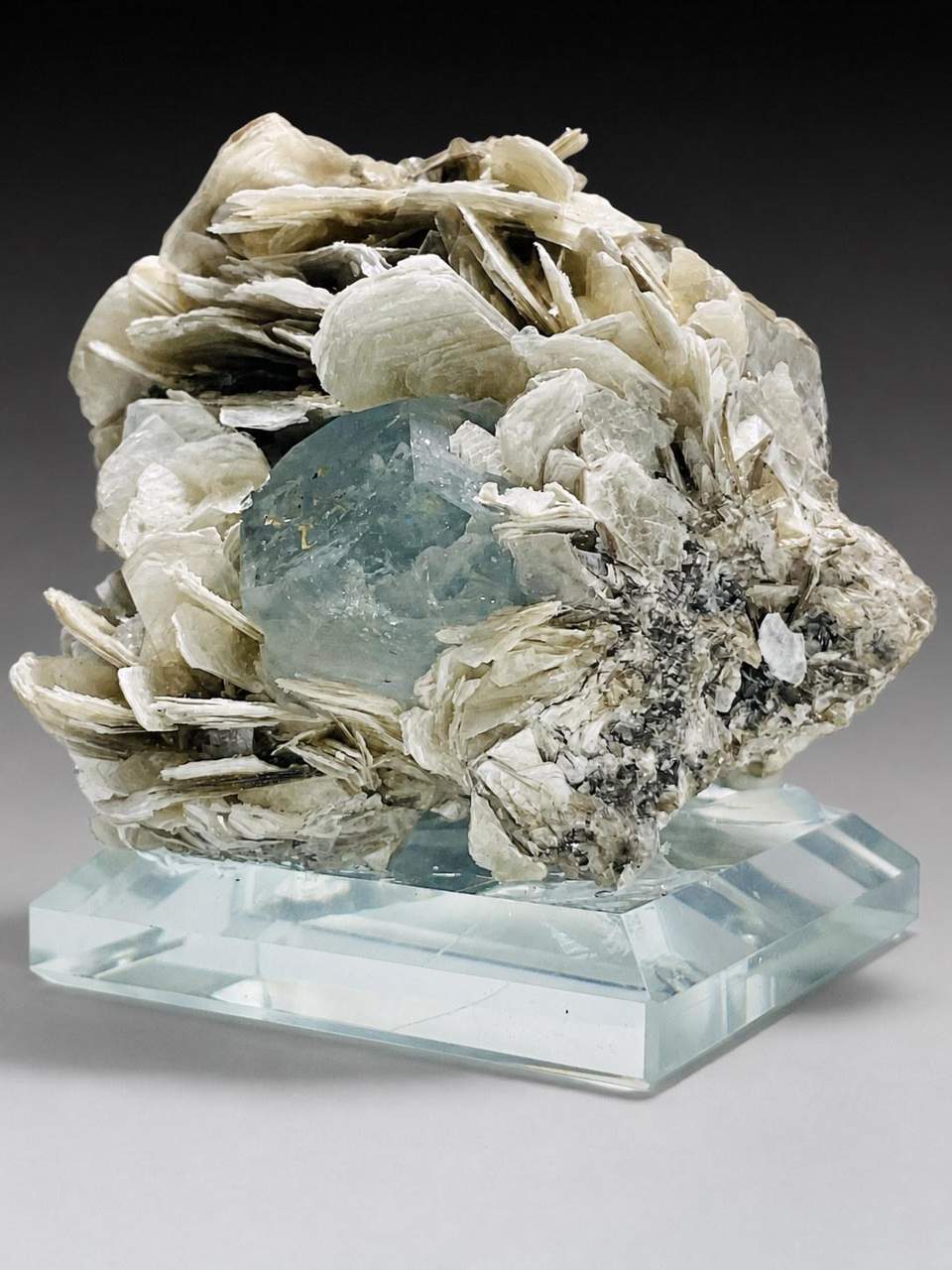
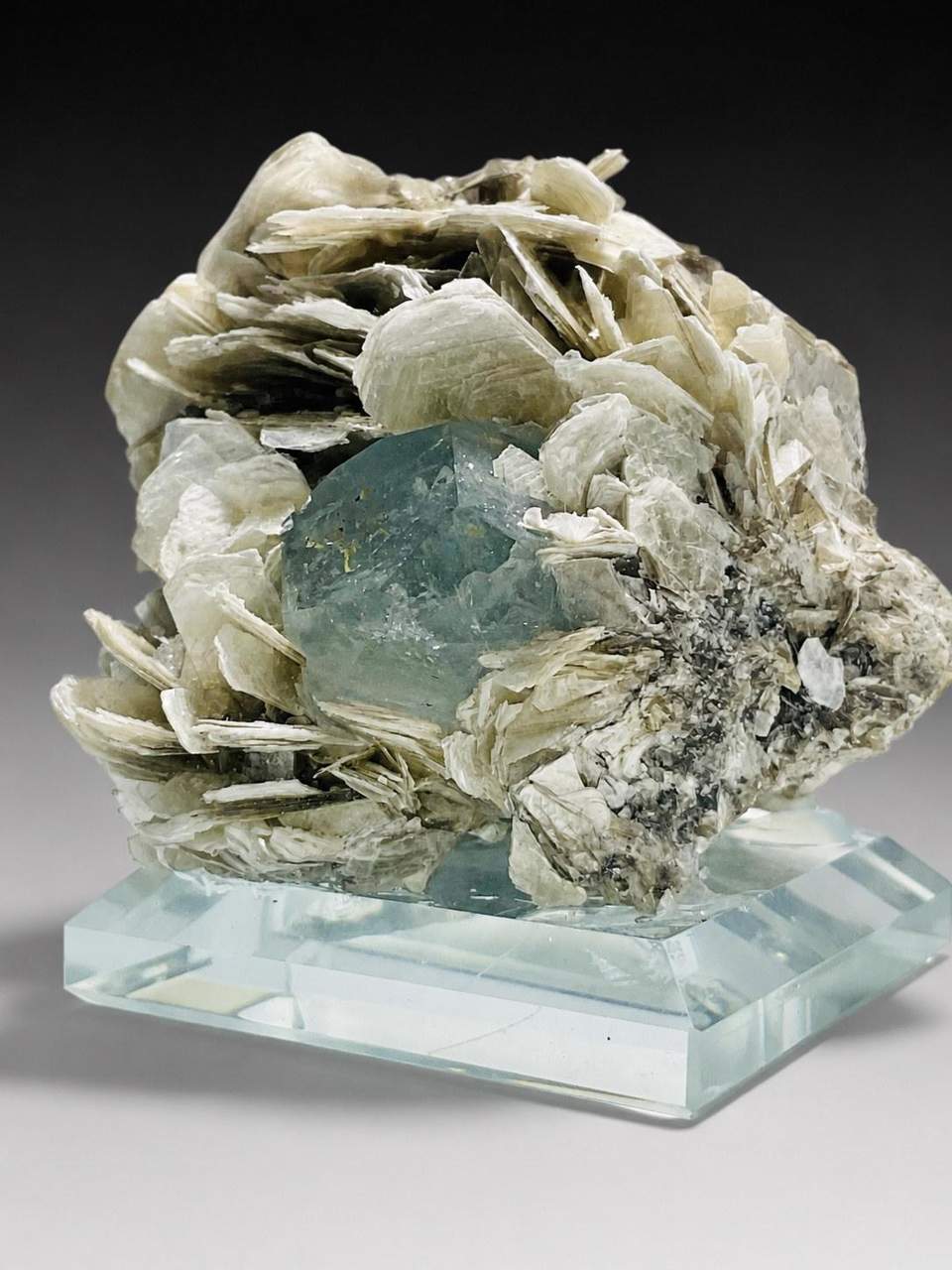
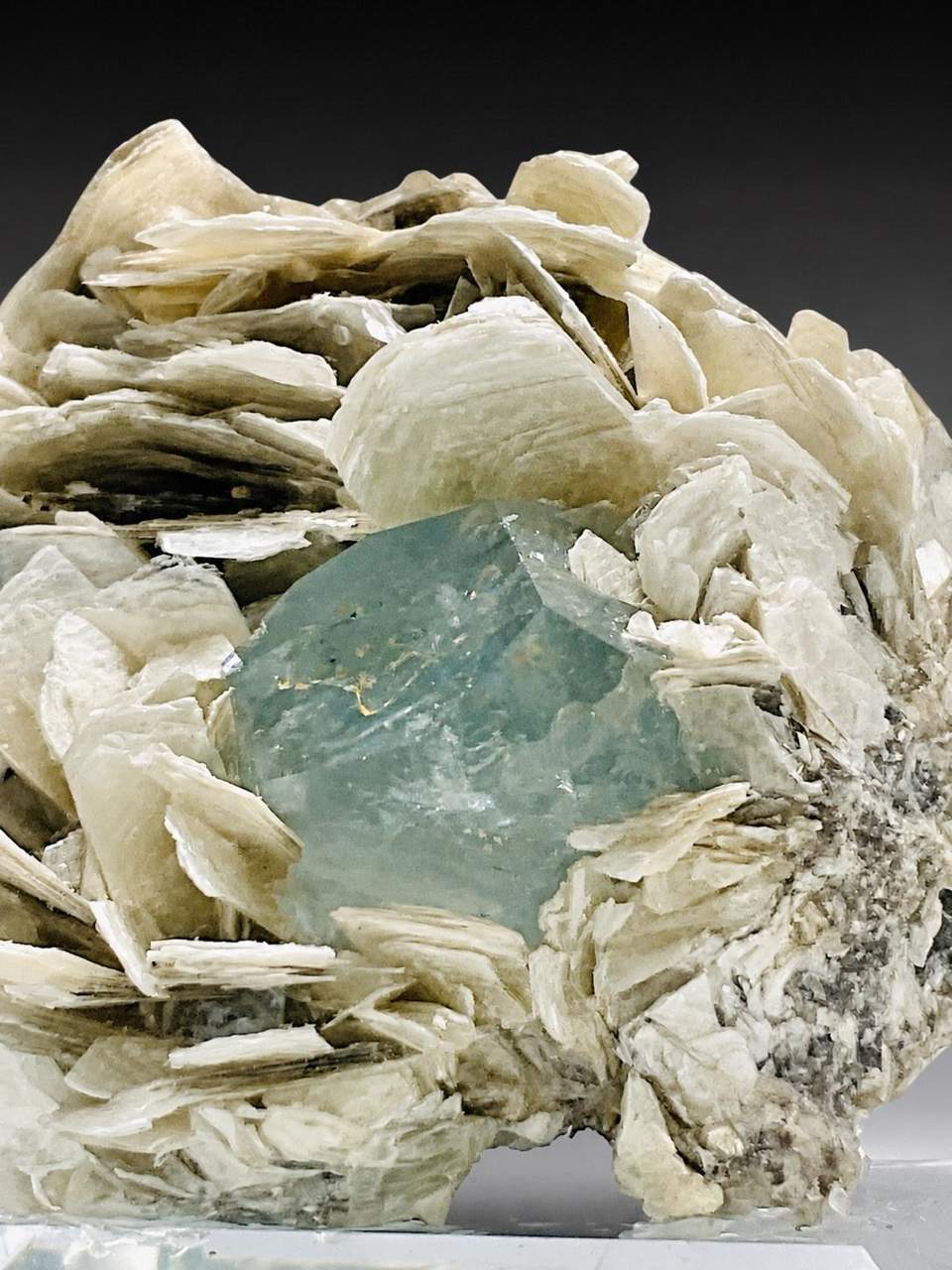
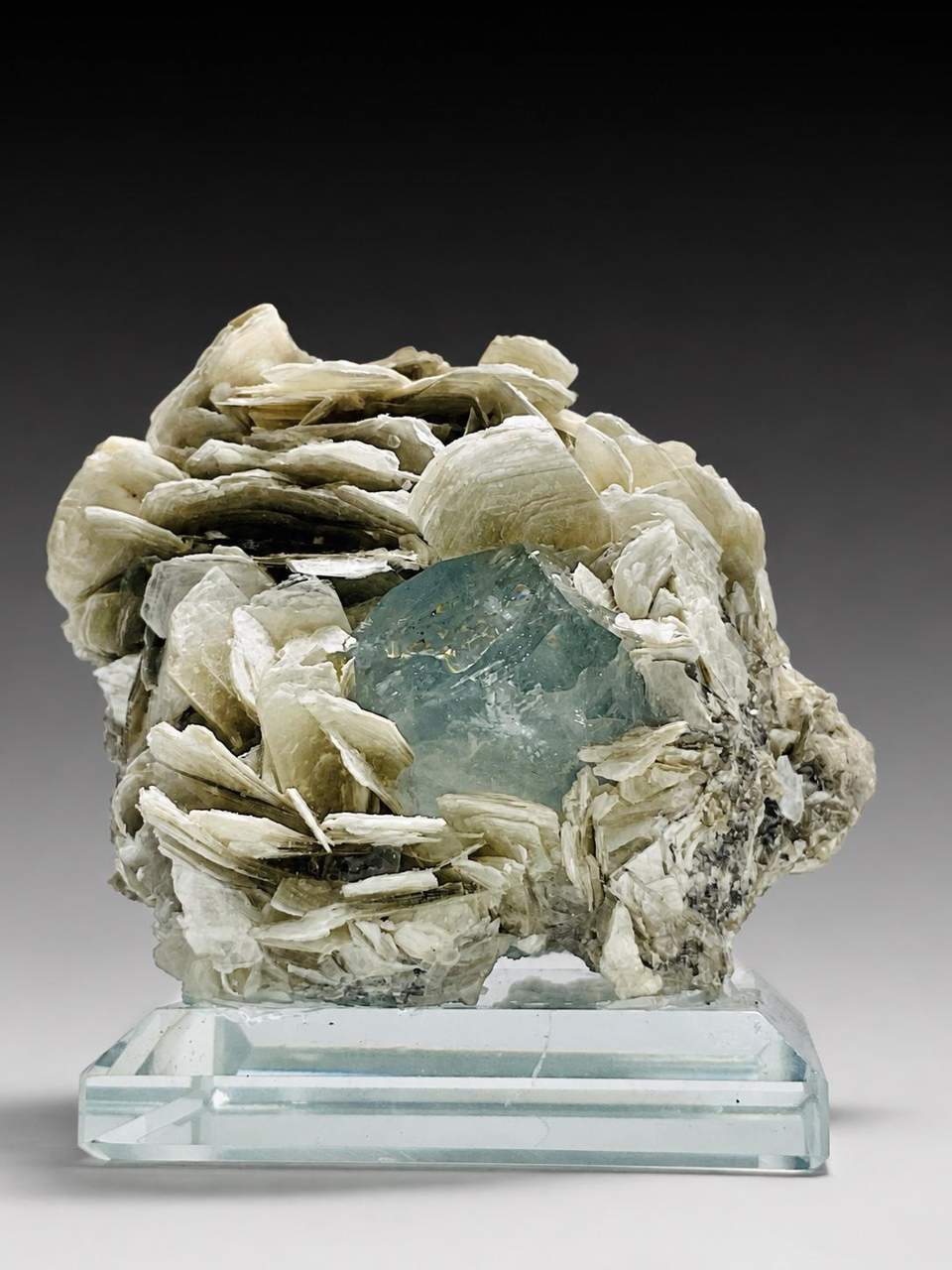
A pale icy-blue Aquamarine crystal nestled in sculptural layers of cream-to-gold Muscovite mica: a classic mineral association from Mount Xuebaoding.
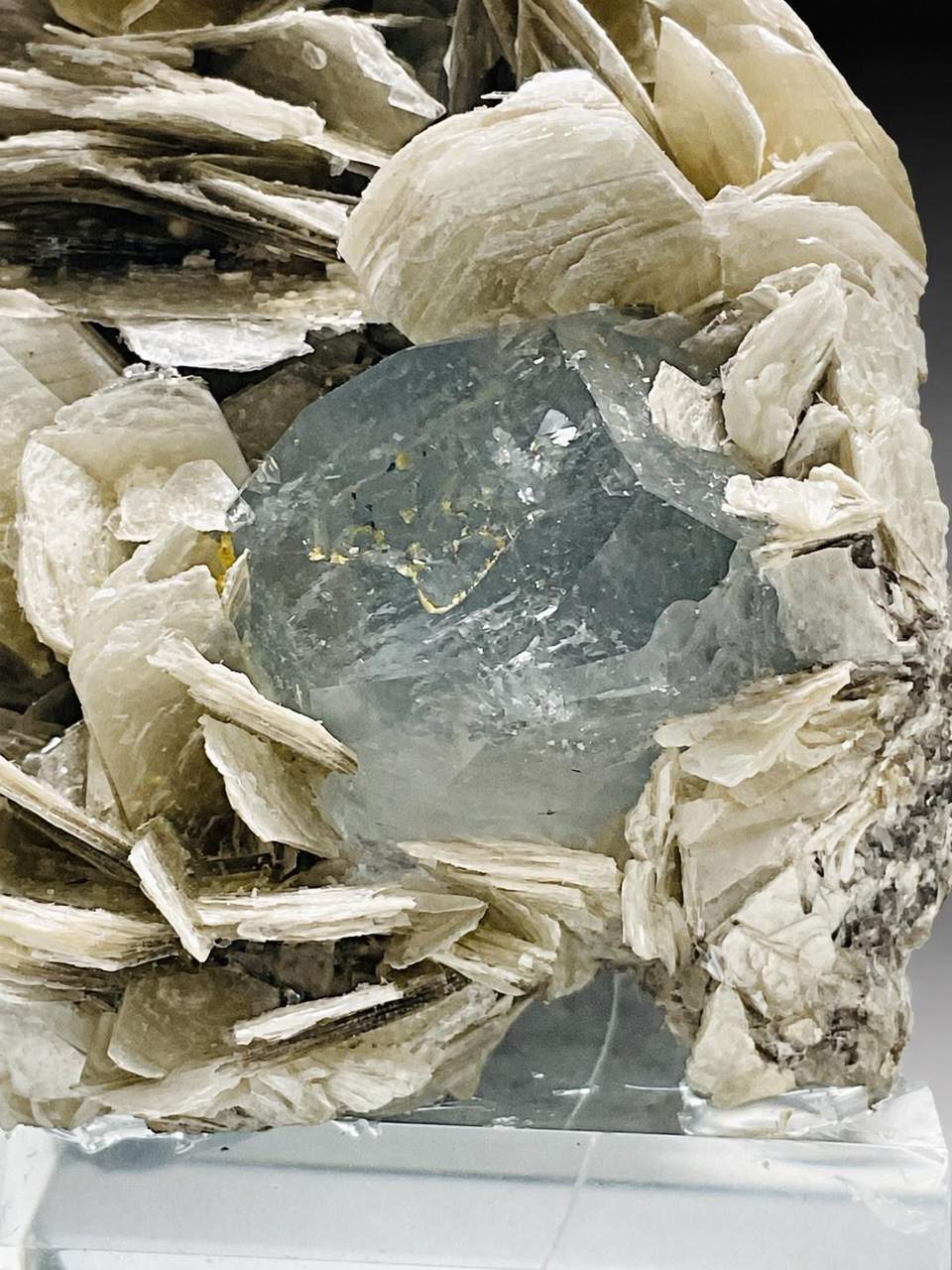
This 200 g Aquamarine on Muscovite specimen is attributed to the Pingwu Mine at Mount Xuebaoding in Sichuan Province, China. The central pale blue beryl crystal measures 20 × 16 mm and shows translucent areas, visible internal features and defined crystal faces.
Overlapping Muscovite blades surround the Aquamarine in cream and soft golden tones. Their layered, reflective surfaces provide a strong contrast with the smooth blue crystal. The complete specimen measures 70 × 70 × 50 mm.
Exact specimen: It is photographed on a clear display base; please ask if you need confirmation that the base is included.
Locality: Pingwu Mine, Mount Xuebaoding, Pingwu County, Sichuan Province, China, as supplied.
The recorded Muscovite association adds a second crystal habit to the piece. Mica forms layered sheets and blades, with a softer pearly reflection than many larger glassy crystals. Its overlapping growth provides both a setting and a visual contrast, so the matrix is part of the specimen’s character rather than simply a support.
The Muscovite association is part of the specimen’s visual character. Its layered mica plates produce pearly reflections and a different texture to the main crystals. The edges and overlapping sheets give the matrix detail of its own. This allows the piece to be appreciated as a natural mineral association, with both the featured crystals and their surrounding growth contributing to the display.
Aquamarine is the blue to blue-green variety of Beryl, a beryllium aluminium silicate. Beryl crystallises in the hexagonal system, often producing elongated prisms with recognisable straight-sided outlines. Aquamarine’s colour and clarity can vary considerably, so a natural collector specimen is assessed for its crystal form and setting as well as the depth of its blue.
A matrix specimen preserves the relationship between the Beryl crystal and the material around it. That setting adds geological interest beyond an isolated crystal: the contact areas, orientation and contrast with accompanying minerals become part of the display. Transparency and reflected light also contribute differently, so a pale crystal can still show a well-defined and attractive natural form.
The recorded origin is Pingwu Mine, Mount Xuebaoding, Sichuan, China. Within a collection of Aquamarine specimens, this locality gives the piece a geographical identity alongside its particular crystal habit and natural setting.
The specimen measures 7 × 7 × 5 cm, with a recorded weight of 200 g. The proportions give a useful guide to its place in a display, with the individual crystal arrangement and mineral association remaining the principal points of interest.
Support the stable matrix or the supplied mount when moving the specimen, avoiding pressure on projecting growth. A secure indoor display allows its natural form and surface detail to be appreciated while protecting exposed crystal edges.
Avalon Crystals & Minerals
A classic Chinese Aquamarine and mica association.
Ask us about the specimen or delivery.
Contact Avalon