One specimen only
Azurite with Malachite · 356 g
Tongshan Copper-Iron Mine, Guichi, Anhui Province, China
£350
Postage: £3.70, added to your specimen price before payment. Choose the region matching your delivery address.
International rates are for parcels up to 2 kg. Contact Avalon before buying heavier or oversized pieces. Royal Mail 24 and 48 are service names, not guaranteed arrival times.
Description
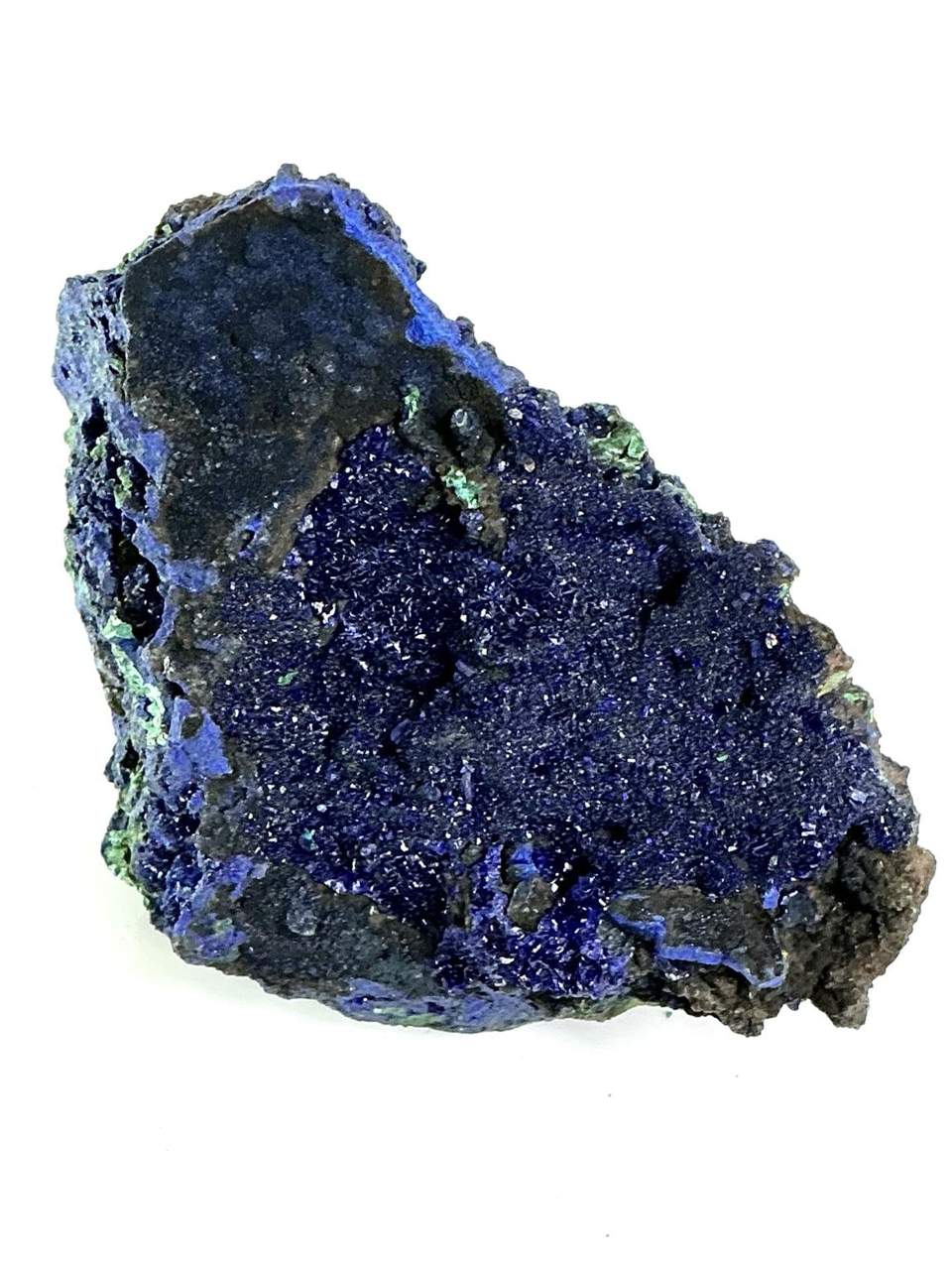
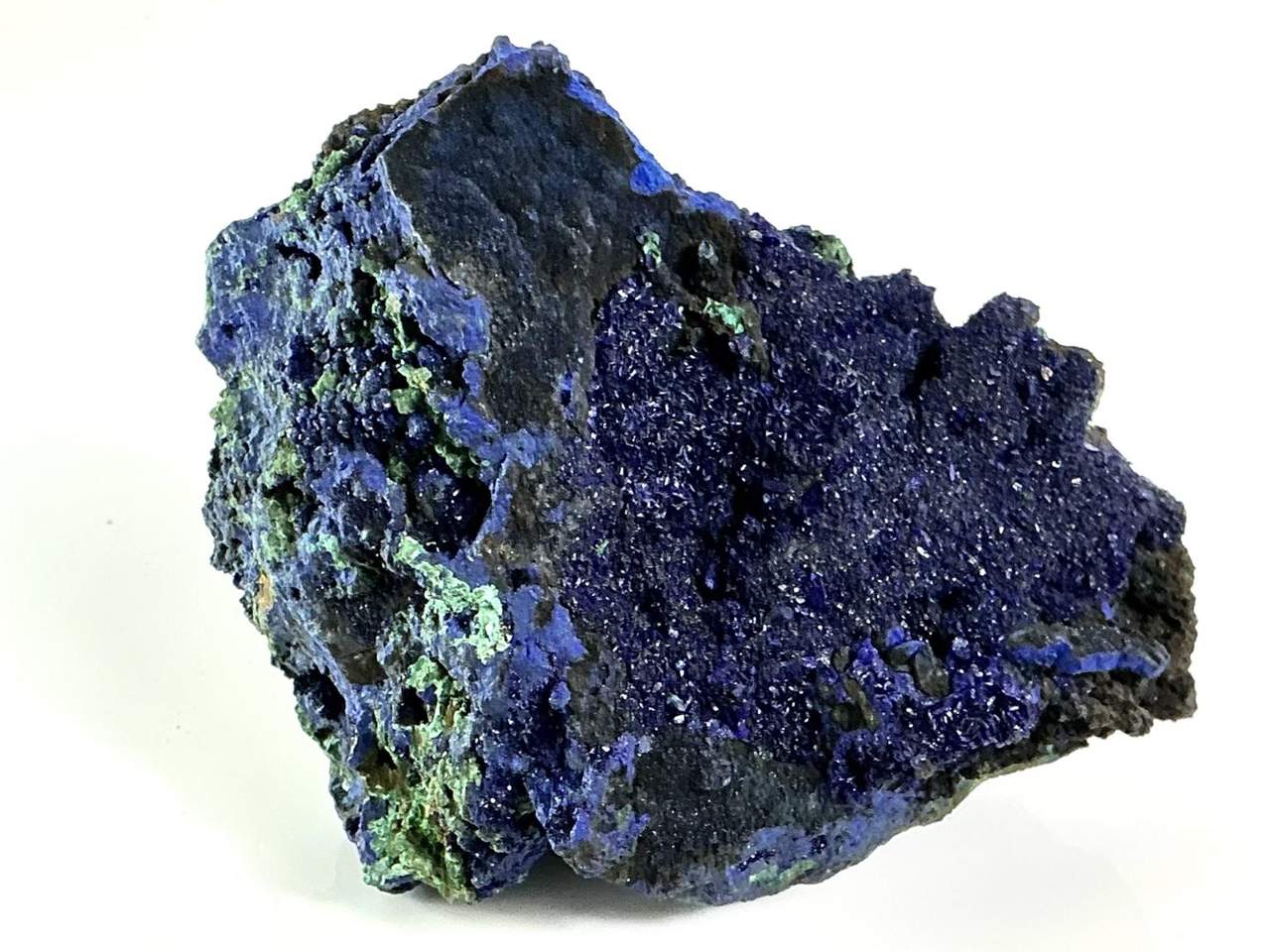
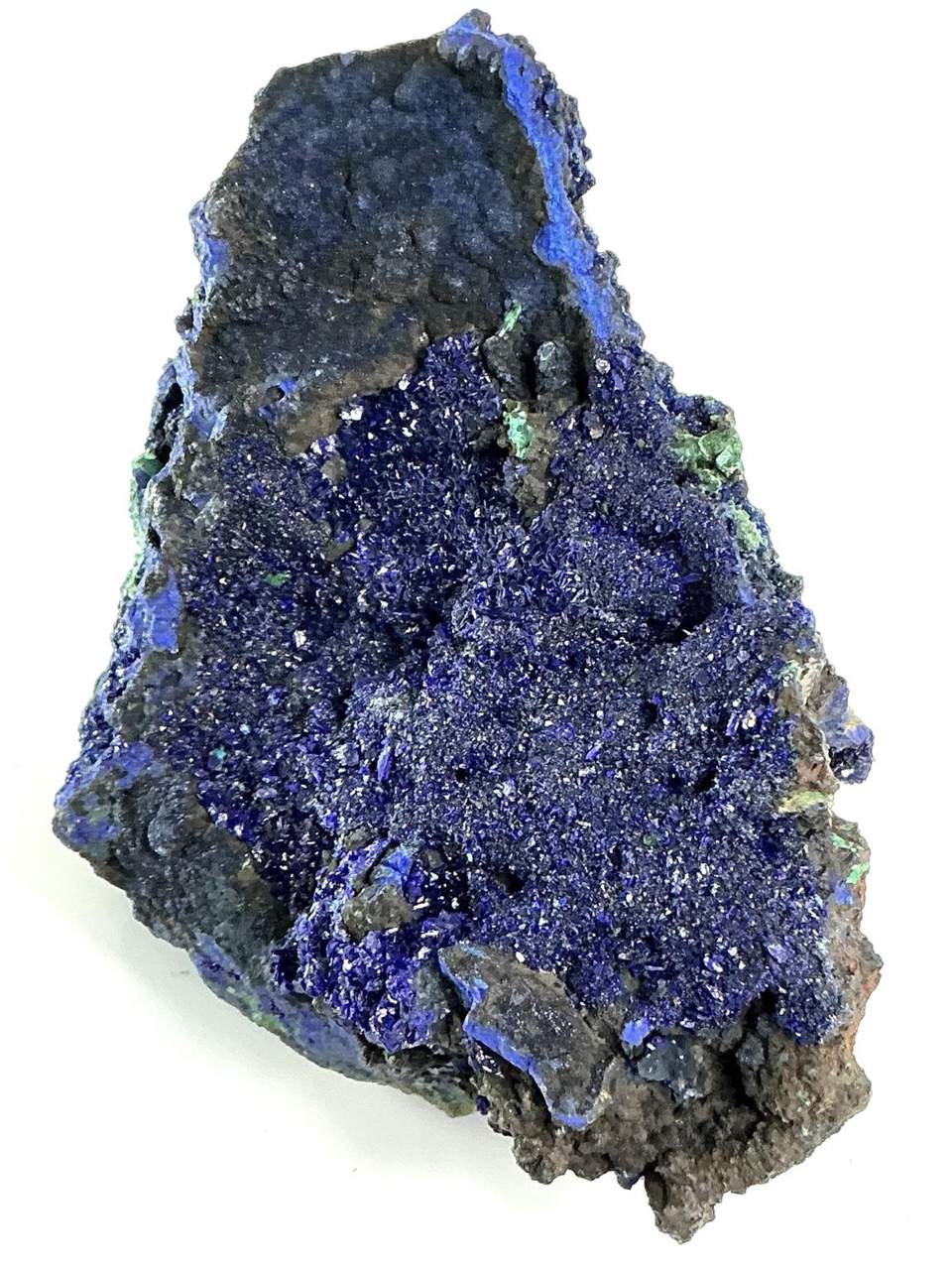
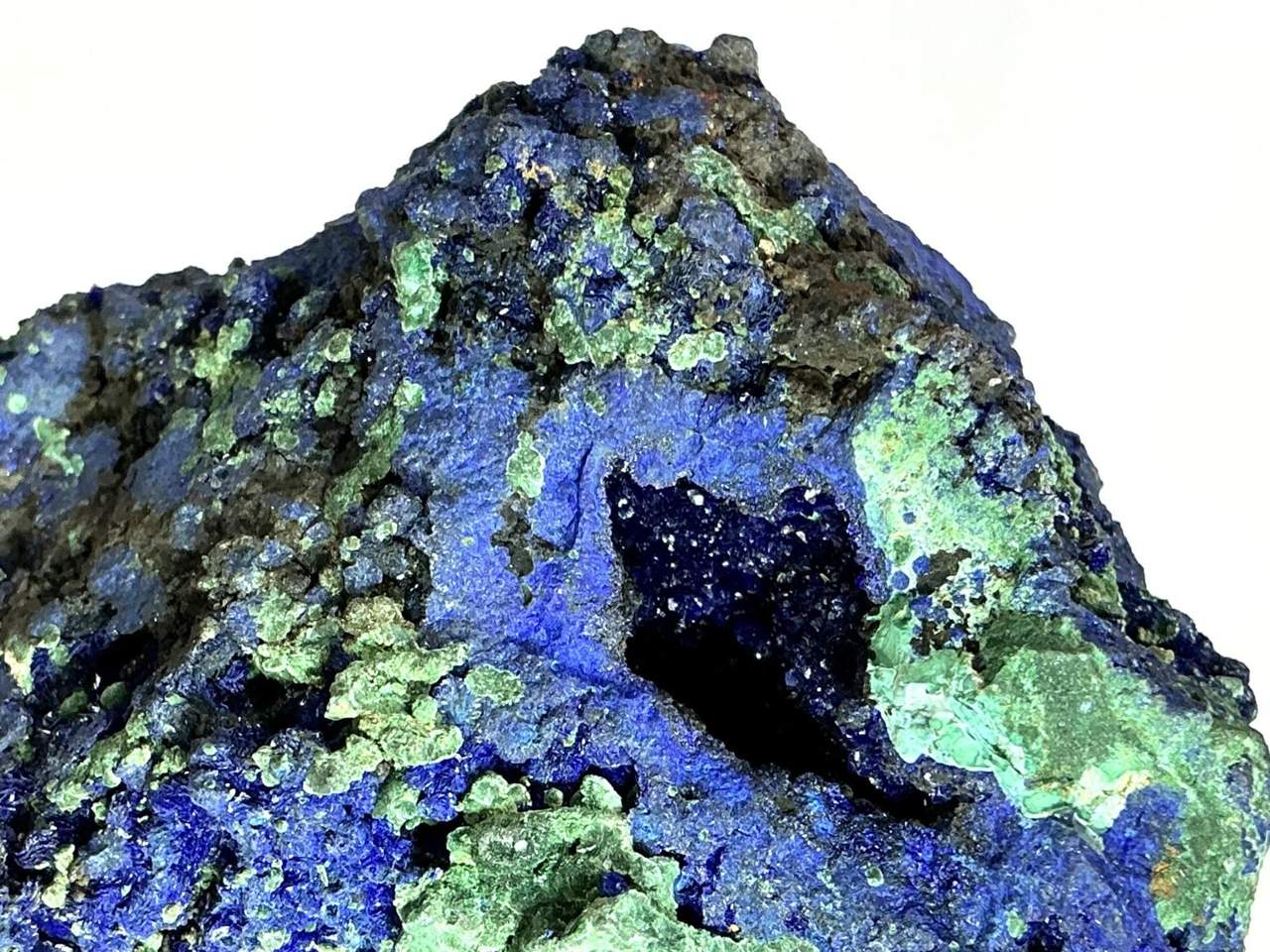
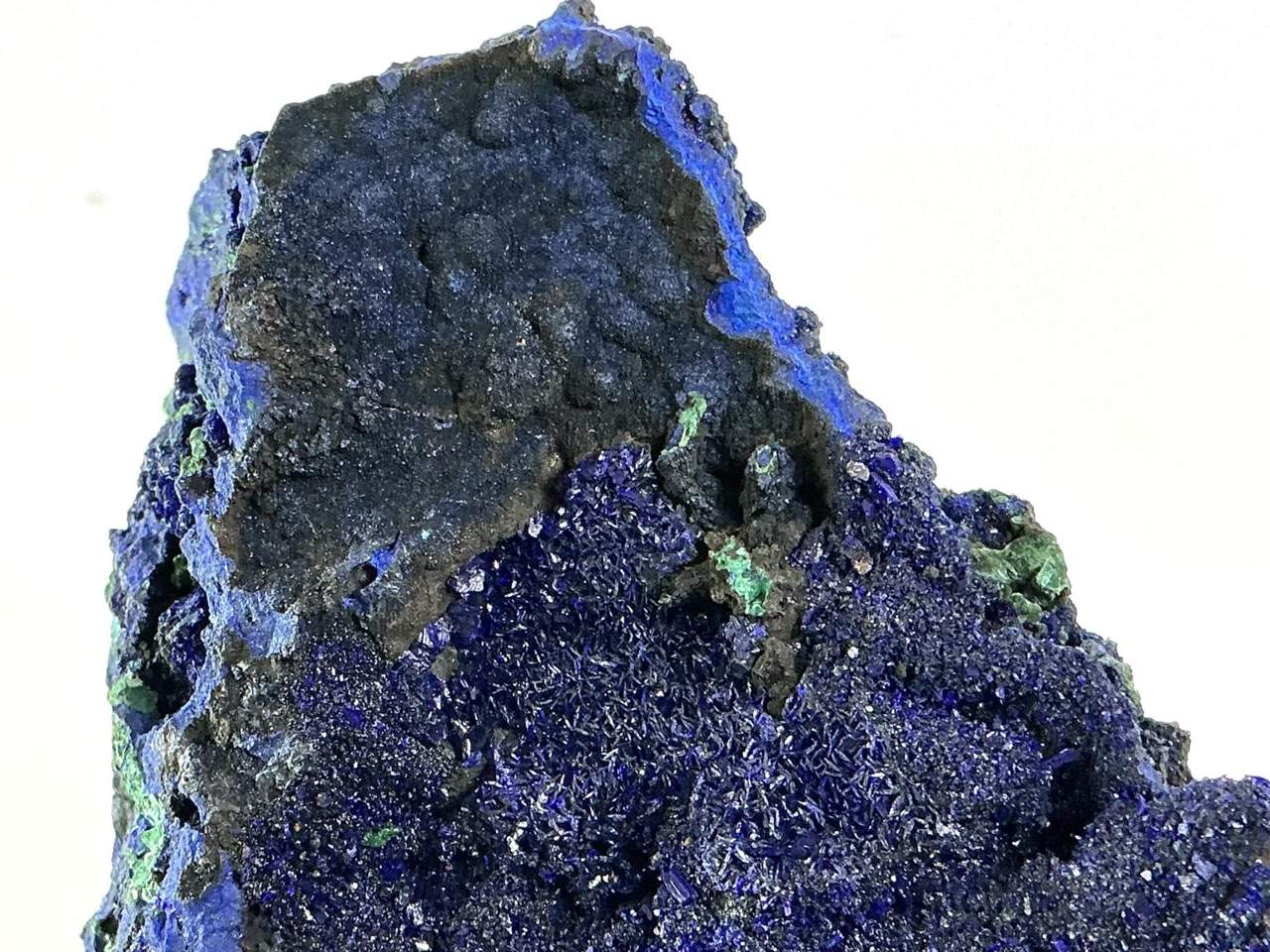
A broad, irregular face of deep-blue Azurite crystals, with green Malachite around the edges and across the reverse. Fine crystal druse sparkles around darker rounded growth and open cavities.
Fine blue Azurite crystals cover much of the display face, contrasting with dark rounded mineral growth and green Malachite. The reverse reveals more green mineralisation and the rugged natural matrix.
Please examine the views for its natural edges and surface condition.
The crossing arrangement described above is an important part of the specimen’s silhouette. It lets the direction of individual crystals be followed through the group, with open spaces making their outlines more apparent. Intersecting crystals alone do not establish a specific twin law; here the description concerns the visible arrangement rather than a laboratory-confirmed crystallographic relationship.
The recorded Malachite adds a second copper-mineral character to the specimen. Its green areas contrast with the other growth and help define boundaries, recesses and changes in texture. This relationship is an important part of the piece’s appeal: the minerals remain together on their natural setting, making it interesting for an association collection as well as for its principal mineral.
Azurite is a blue copper carbonate mineral that develops in the oxidised parts of copper deposits. It can occur as distinct crystals, closely packed sparkling growth, rounded aggregates and more massive material. These different habits give specimens very different textures even when the deep blue colour immediately identifies the main visual theme.
Collectors often compare Azurite by the relationship between its crystal surfaces and the underlying matrix. Larger faces give distinct reflections, while fine growth produces a more continuous sparkle. Blue tones can appear darker in thicker or shaded areas and brighter along exposed edges. Its natural shape and the distribution of growth across the piece are therefore as useful to study as the colour itself.
The recorded origin is Tongshan Copper-Iron Mine, Guichi, Anhui Province, China. Within a collection of Azurite specimens, this locality gives the piece a geographical identity alongside its particular crystal habit and natural setting.
The specimen measures 174 × 118 × 62 mm, with a recorded weight of 356 g. The proportions give a useful guide to its place in a display, with the individual crystal arrangement and mineral association remaining the principal points of interest.
Support the stable matrix or the supplied mount when moving the specimen, avoiding pressure on projecting growth. A secure indoor display allows its natural form and surface detail to be appreciated while protecting exposed crystal edges.