One natural mineral specimen
Cactus Amethyst / Spirit Quartz · 174 g
Magaliesberg Mountain Range, South Africa
£85
Postage: £3.70, added to your specimen price before payment. Choose the region matching your delivery address.
International rates are for parcels up to 2 kg. Contact Avalon before buying heavier or oversized pieces. Royal Mail 24 and 48 are service names, not guaranteed arrival times.
Description
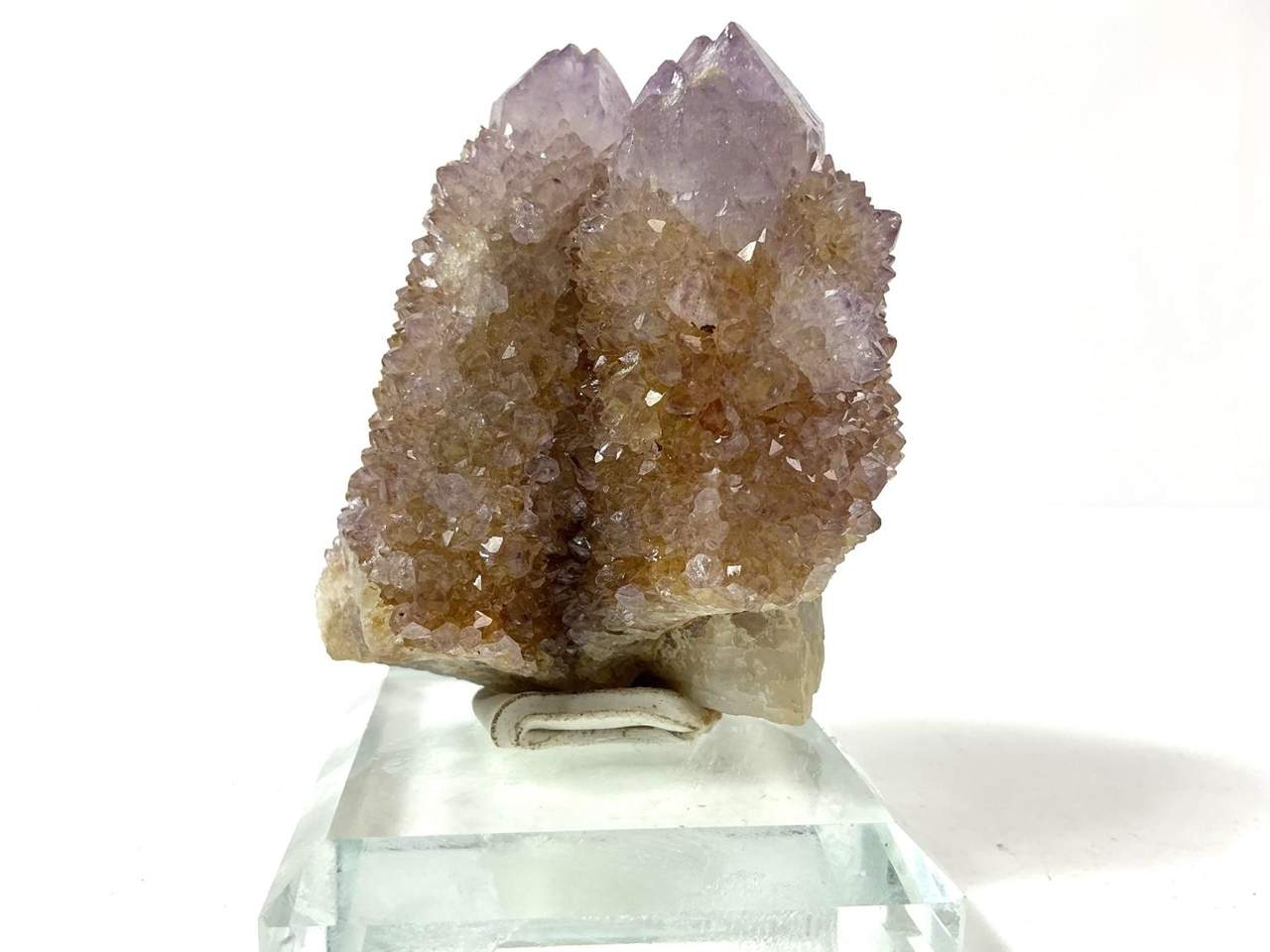
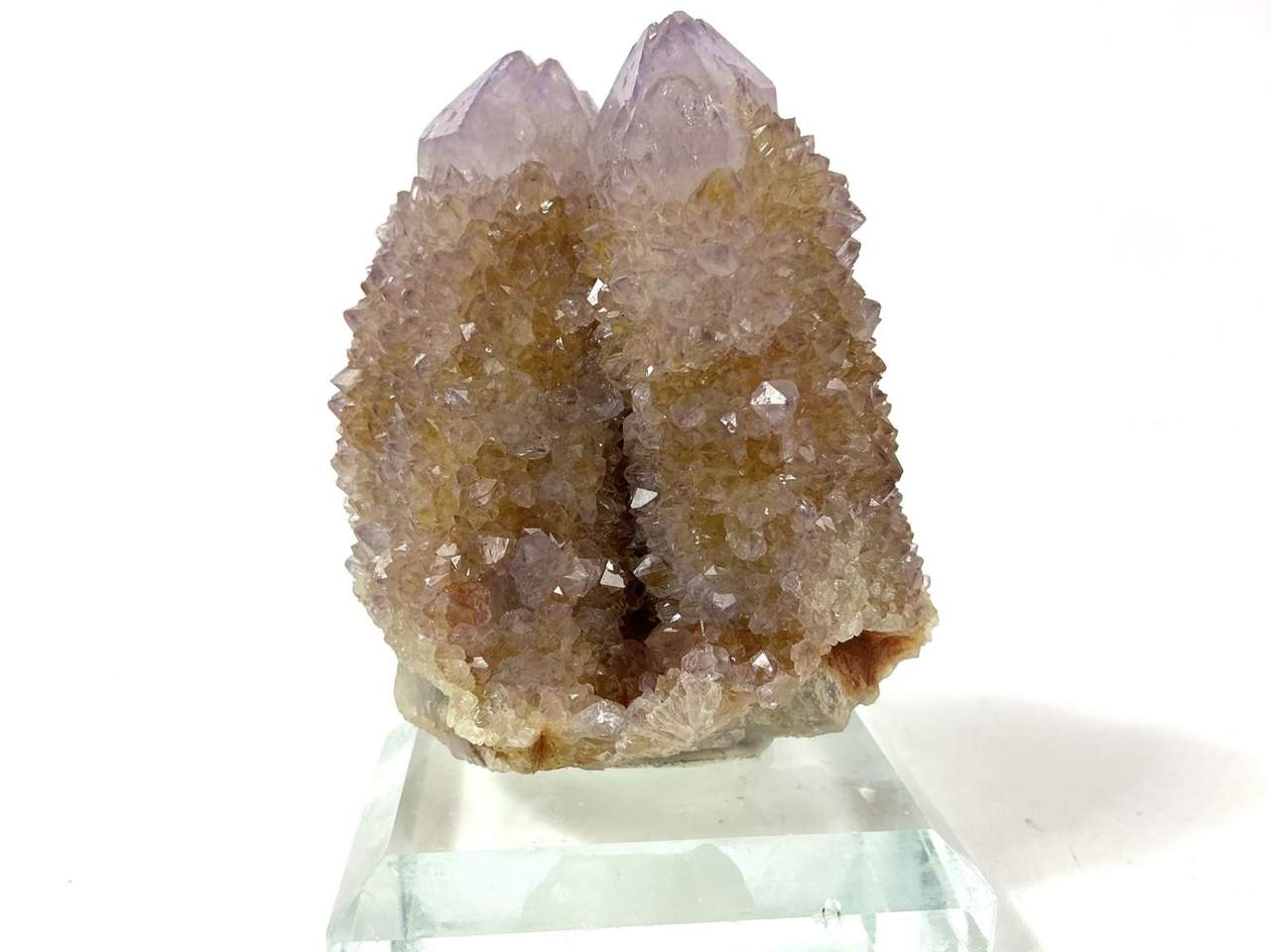
Two prominent pale-lilac Amethyst points rise above a dense covering of smaller crystals. Warm golden-brown areas beneath the tips contrast with the sparkling lavender surface and pale natural matrix.
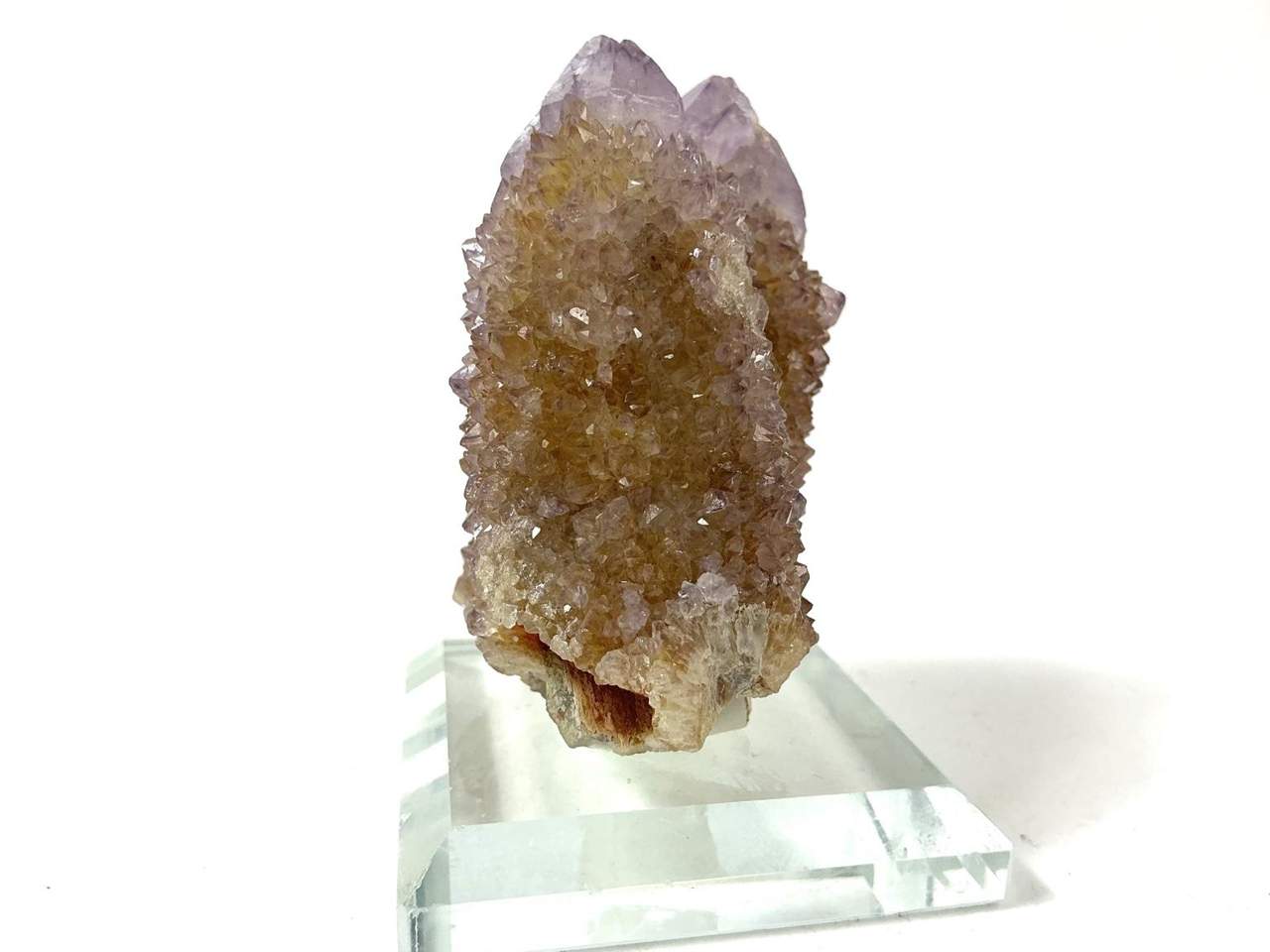
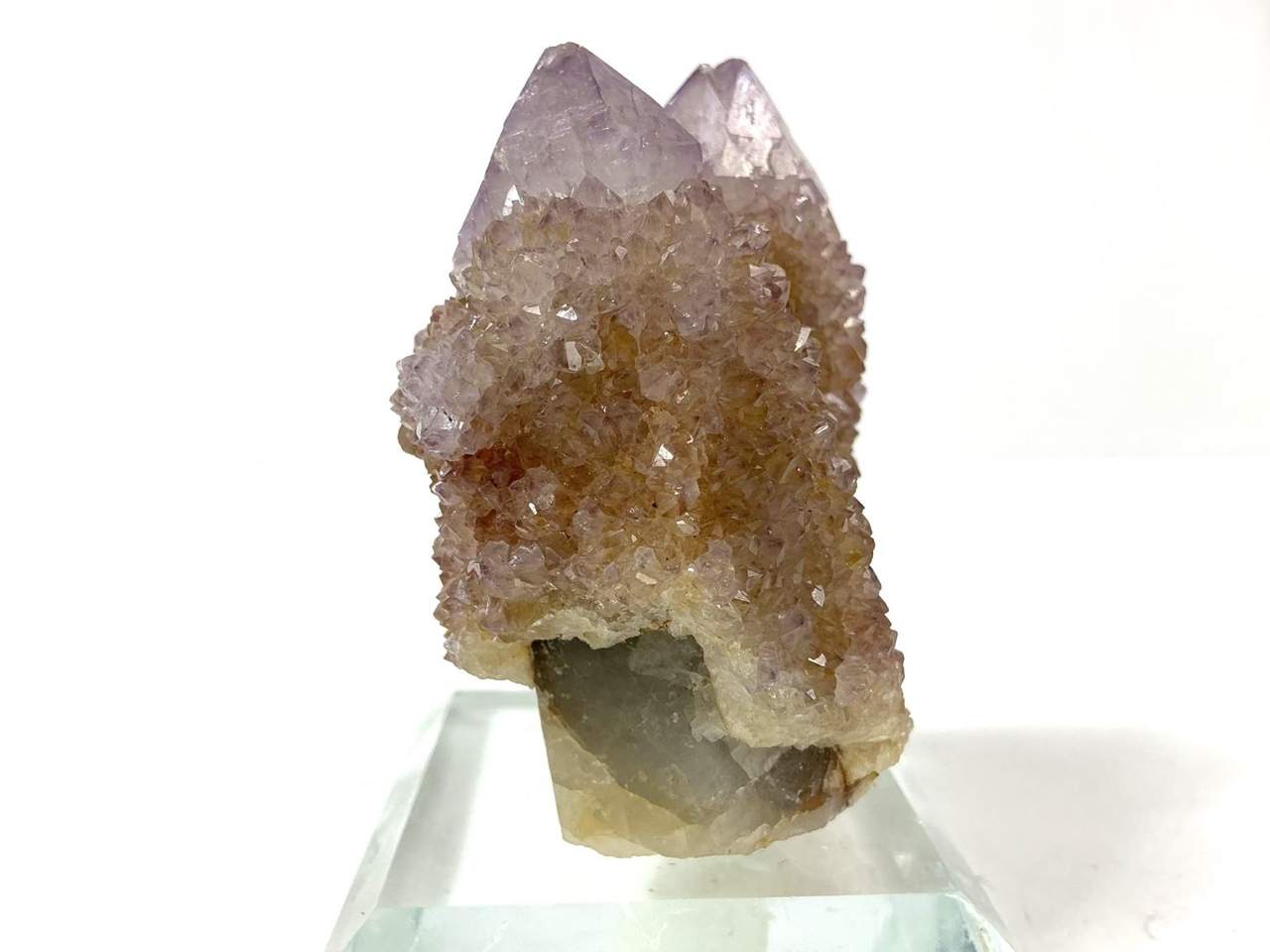
The paired points give this Spirit Quartz an upright profile. Small reflective crystals coat much of their sides, while the rear and side views reveal the natural matrix and variations in colour and crystal growth.
Also known as Cactus Quartz, Porcupine Quartz and Spirit Crystal, this specimen is supplied with the locality Magaliesberg Mountain Range, in the Gauteng / North West region near Johannesburg, South Africa.
You will receive the mineral photographed. Colour and reflections vary with lighting and screen settings.
The Cactus or Spirit Quartz name describes a larger crystal covered by many smaller Quartz crystals. The larger points establish the shape of the group, while the fine overgrowth gives its surface a sparkling texture. This layered growth is the main distinction from an Amethyst cluster made up only of exposed, smooth-faced points.
Amethyst is the violet variety of Quartz, so its colour and pointed crystal habit belong to the same mineral family as clear rock crystal. Violet colour is associated with iron-related features in the crystal structure and natural irradiation. Colour can vary within a single crystal, giving different impressions at the tips, edges and thicker parts of a group.
A cluster of Amethyst is interesting at two scales: the outline of the whole piece and the individual faces that make up its surface. Closely grouped crystals create a sparkling texture, while larger points give the specimen direction and shape. The balance between pale and darker areas is useful when comparing one Amethyst specimen with another.
The recorded origin is Magaliesberg Mountain Range, South Africa. Within a collection of Amethyst specimens, this locality gives the piece a geographical identity alongside its particular crystal habit and natural setting.
The specimen measures 63 × 54 × 50 mm, with a recorded weight of 174 g. The proportions give a useful guide to its place in a display, with the individual crystal arrangement and mineral association remaining the principal points of interest.
Support the matrix or the supplied mount when moving the piece, avoiding pressure on the Amethyst points. A shaded indoor display is a sensible choice for retaining its colour and keeping the fine crystal surfaces free from unnecessary handling.