Natural mineral specimen · One available
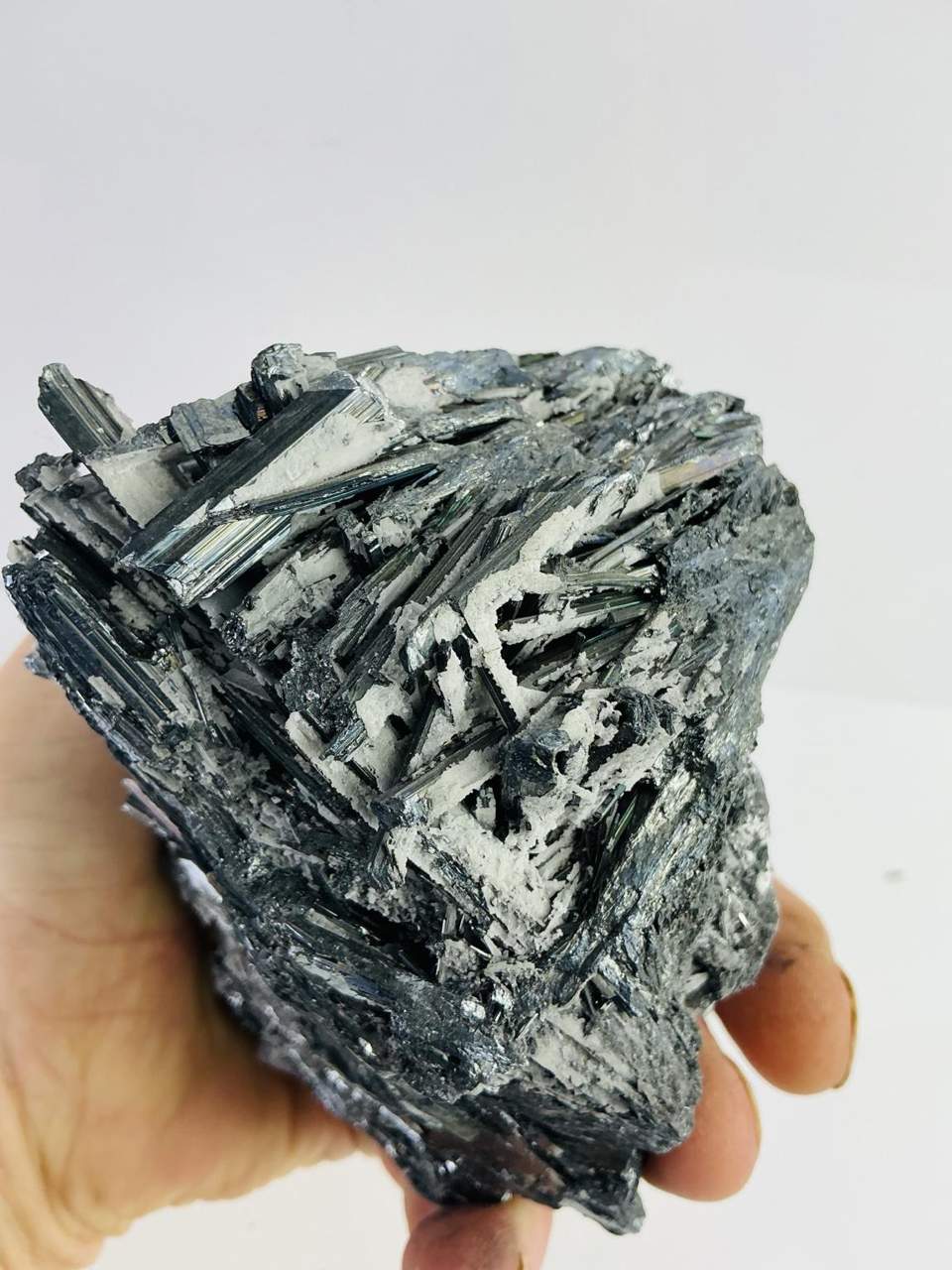
Lustrous Stibnite with Dolomite — Qinglong Mine, China
Qinglong Mine, Guizhou Province, China
£450
Postage: £3.70, added to your specimen price before payment. Choose the region matching your delivery address.
International rates are for parcels up to 2 kg. Contact Avalon before buying heavier or oversized pieces. Royal Mail 24 and 48 are service names, not guaranteed arrival times.
Description
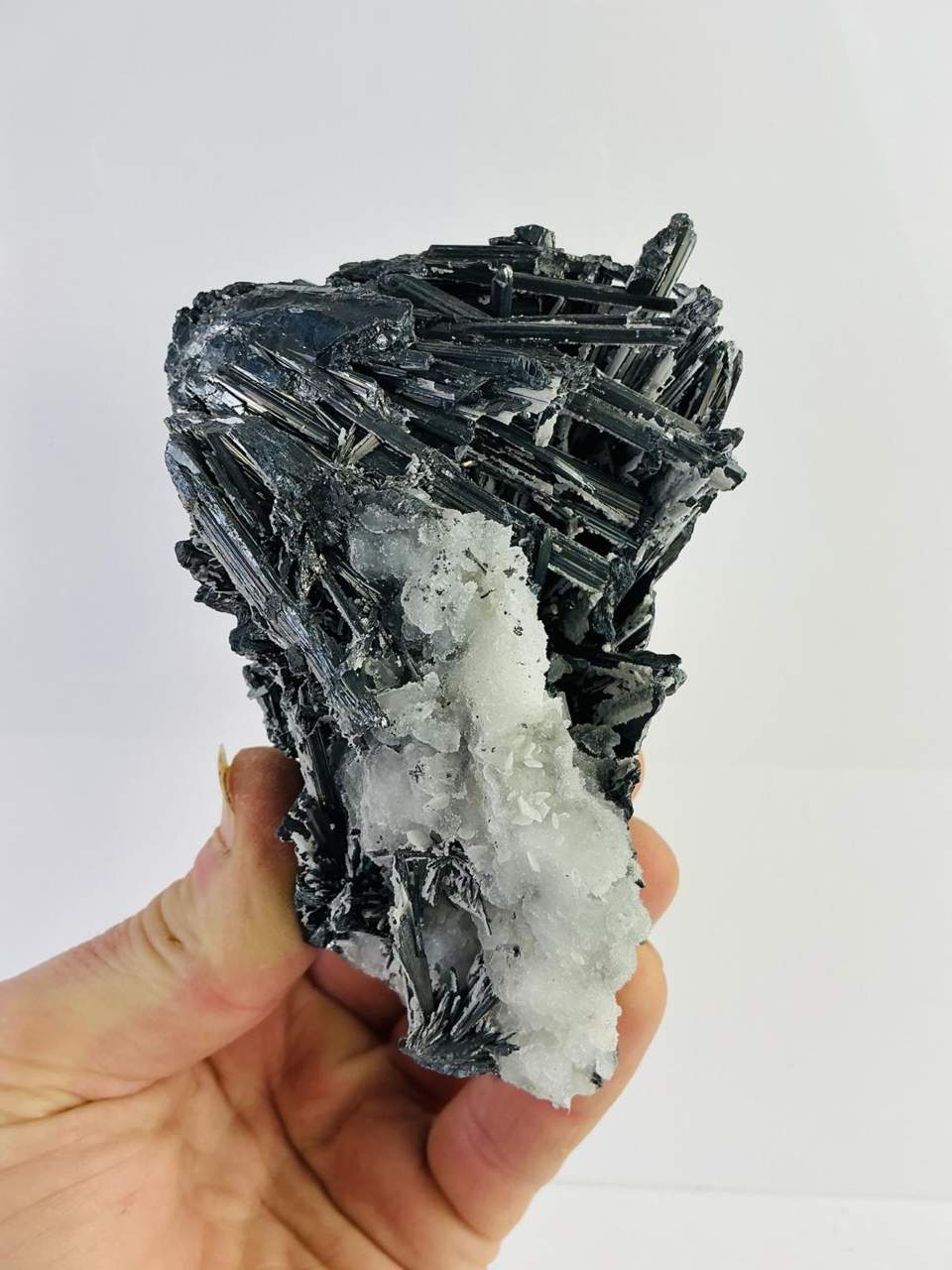
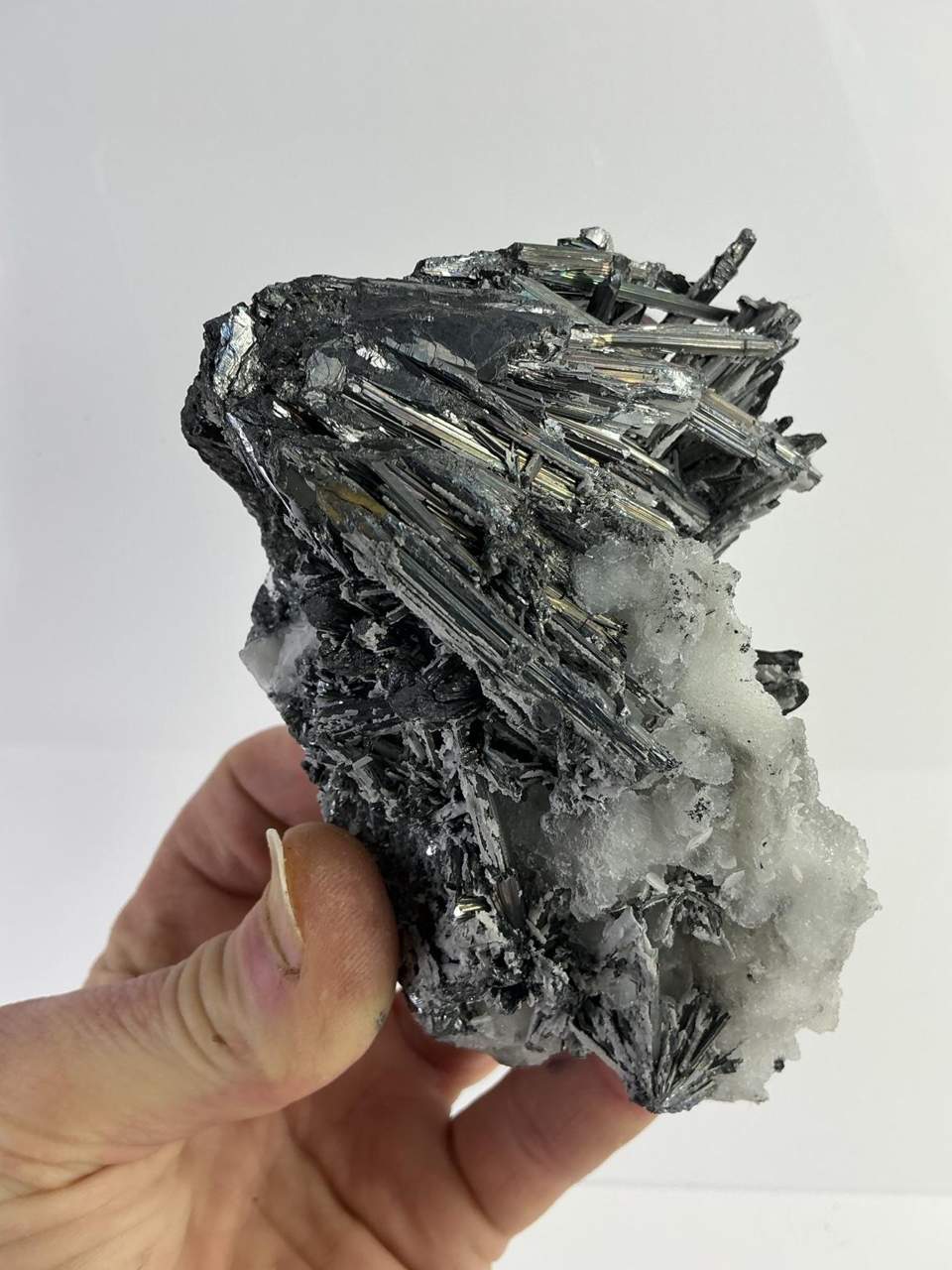
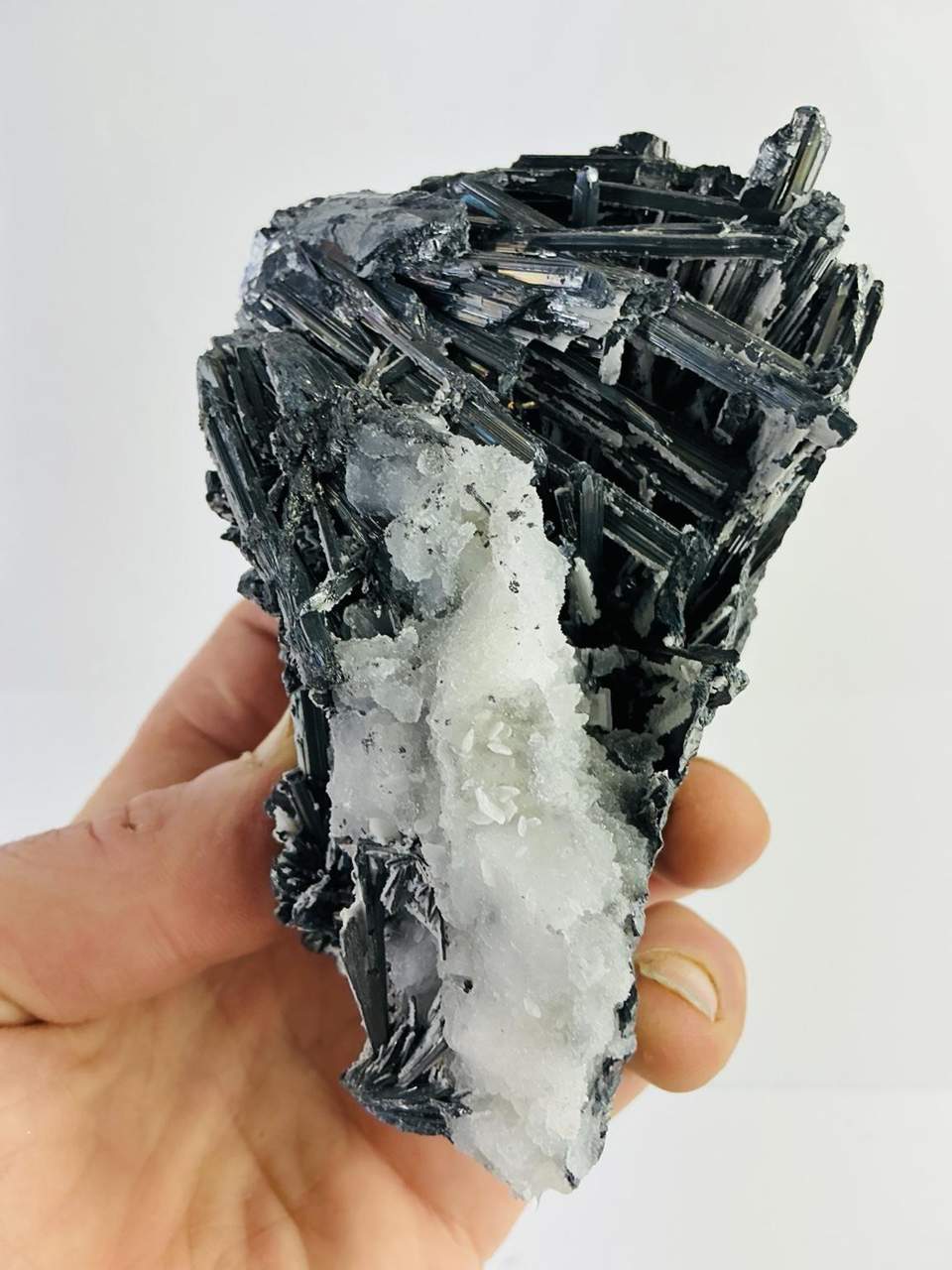
A substantial Stibnite crystal cluster from Qinglong Mine in Guizhou Province, China, combining dense metallic blades with a contrasting pale Dolomite association. Weighing 714 g, this cabinet specimen has a strongly sculptural outline, with overlapping crystals building a broad, layered display rather than a single isolated spray.
Elongated blades run through the cluster in several directions. Some form closely packed, near-parallel groups, while others cross at diagonal angles, creating open spaces and X-shaped intersections within the structure. These crossings add visual interest to the intergrown arrangement; they are described here as intersecting crystals rather than a confirmed crystallographic twin.
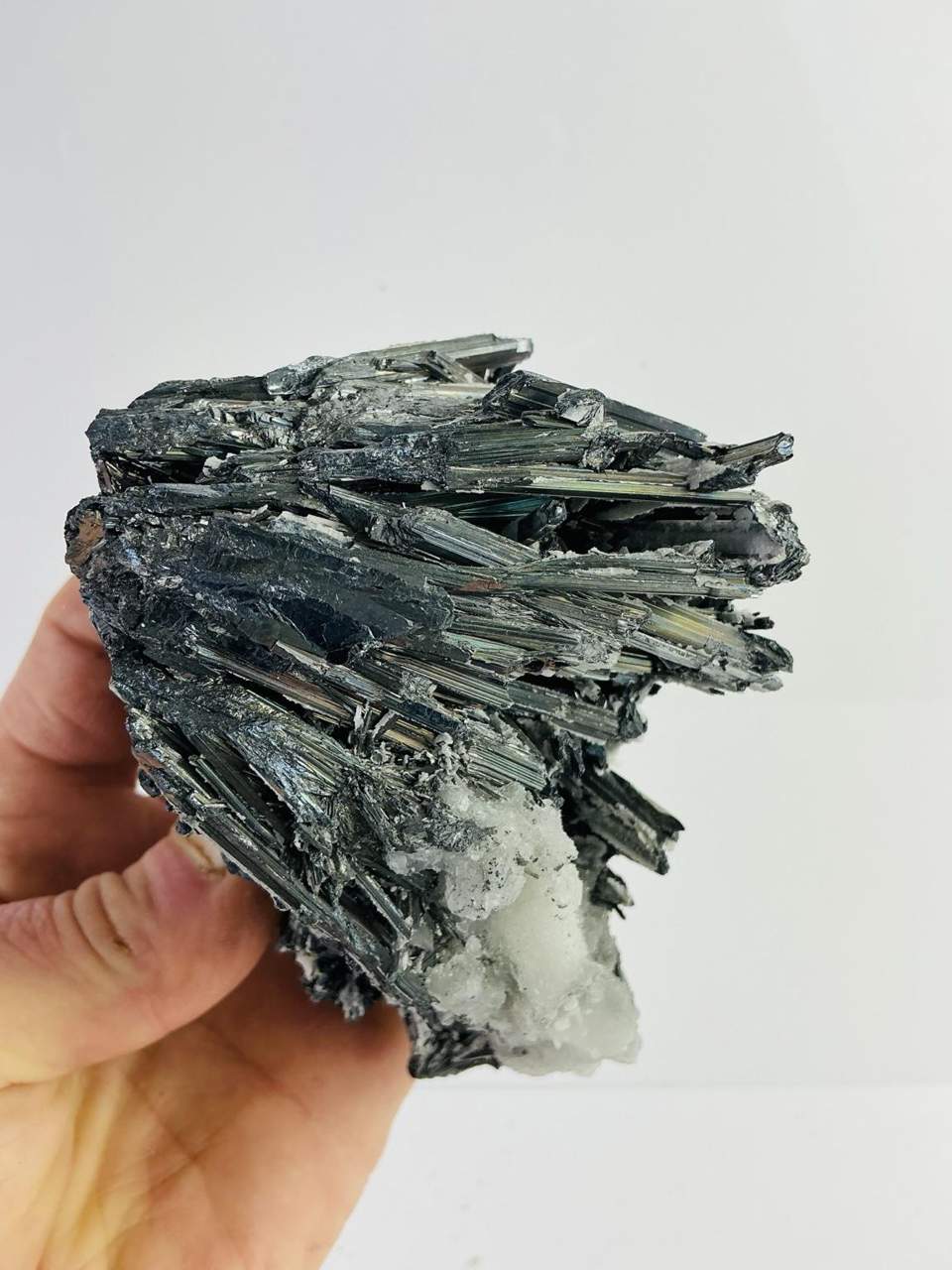
Fine lengthwise striations are a prominent feature of the Stibnite. The grooves catch narrow bands of light, emphasising the direction and length of the blades. Bright silver-grey reflections alternate with darker steel-coloured faces, so the appearance changes considerably as the specimen is turned. Subtle iridescent tones and light surface tarnish add further variation to the metallic surfaces.
The Dolomite provides a softer contrast to this angular framework. Fine pale crystalline coatings are scattered between and over the blades, with a more substantial white patch across part of the display face. Its finely textured surface breaks up the darker metallic growth and makes the association an important part of the specimen’s character.
Stibnite is antimony sulphide, with the chemical formula Sb₂S₃, and is the principal ore mineral of antimony. It crystallises in the orthorhombic system and is well known for its elongated, bladed habit. Stibnite commonly occurs in hydrothermal mineral deposits; here, its appeal lies in the visible crystal architecture, metallic lustre and the contrast with the accompanying carbonate mineral.
Dolomite is a calcium-magnesium carbonate. Its pale crystalline growth gives this piece a different texture and reflective quality from the Stibnite, allowing the two minerals to be appreciated together. The supplied locality is Qinglong Mine, Guizhou Province, China, a familiar Chinese locality among collectors of crystallised Stibnite.
At 12 × 8 × 8.5 cm, the specimen offers a substantial three-dimensional display, with detail extending around the sides and reverse. The densely intergrown blades, contrasting white association and shifting reflections give collectors several features to explore. Crystal edges and contact areas vary across the cluster, including uneven and blunt ends, and form part of its individual condition.
Stibnite is very soft, around 2 on the Mohs scale, and the projecting blades need gentle handling. Support the stable body of the specimen rather than lifting it by individual crystals, and avoid rubbing or brushing the metallic faces. A secure display position helps protect the delicate outer growth and preserves the layered structure that gives this piece its character.