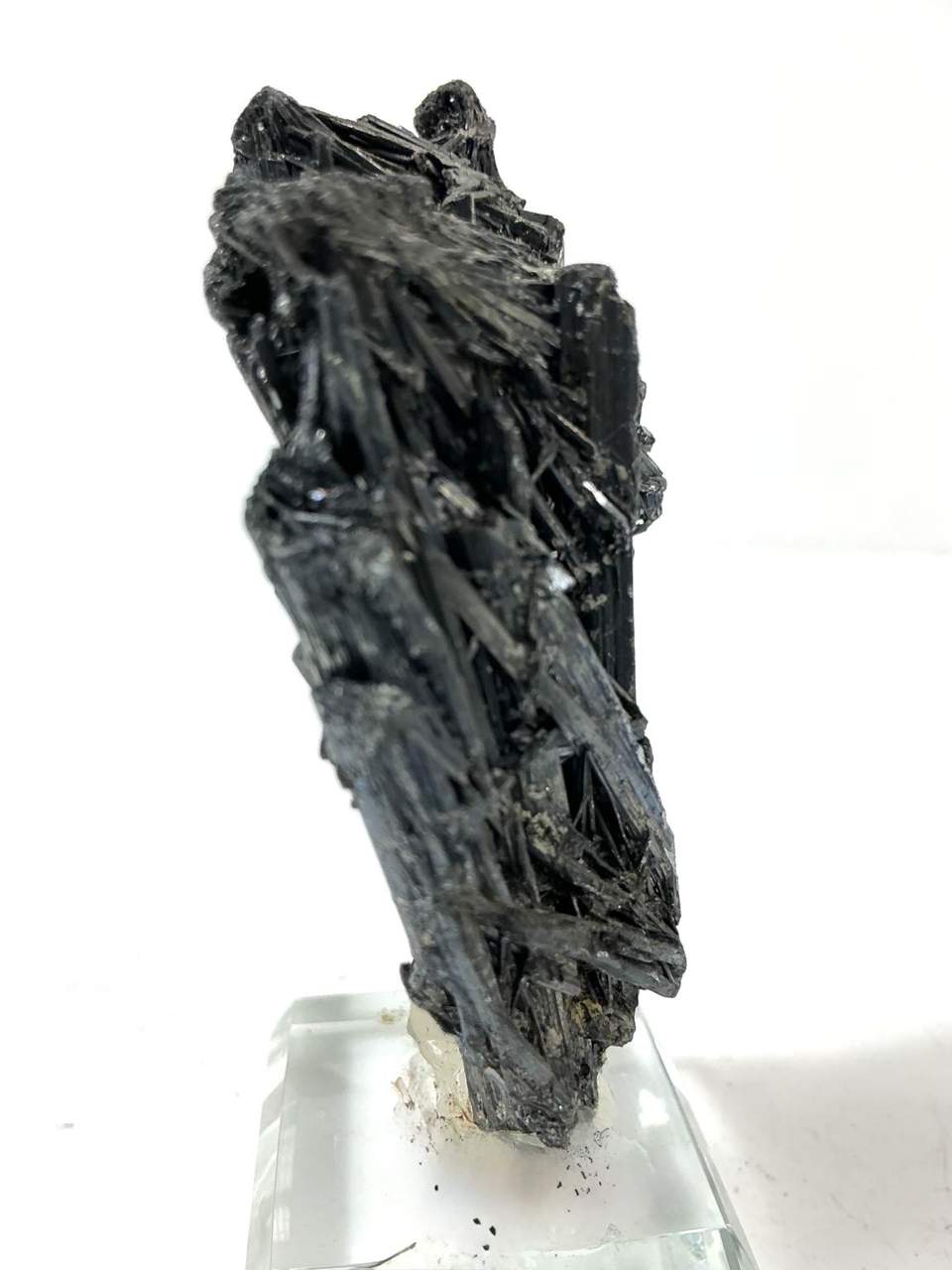
One natural mineral specimen
Stibnite Blades with Dolomite · 45 g
Qinglong Mine, Guizhou, China
£50
Postage: £3.70, added to your specimen price before payment. Choose the region matching your delivery address.
International rates are for parcels up to 2 kg. Contact Avalon before buying heavier or oversized pieces. Royal Mail 24 and 48 are service names, not guaranteed arrival times.
Description
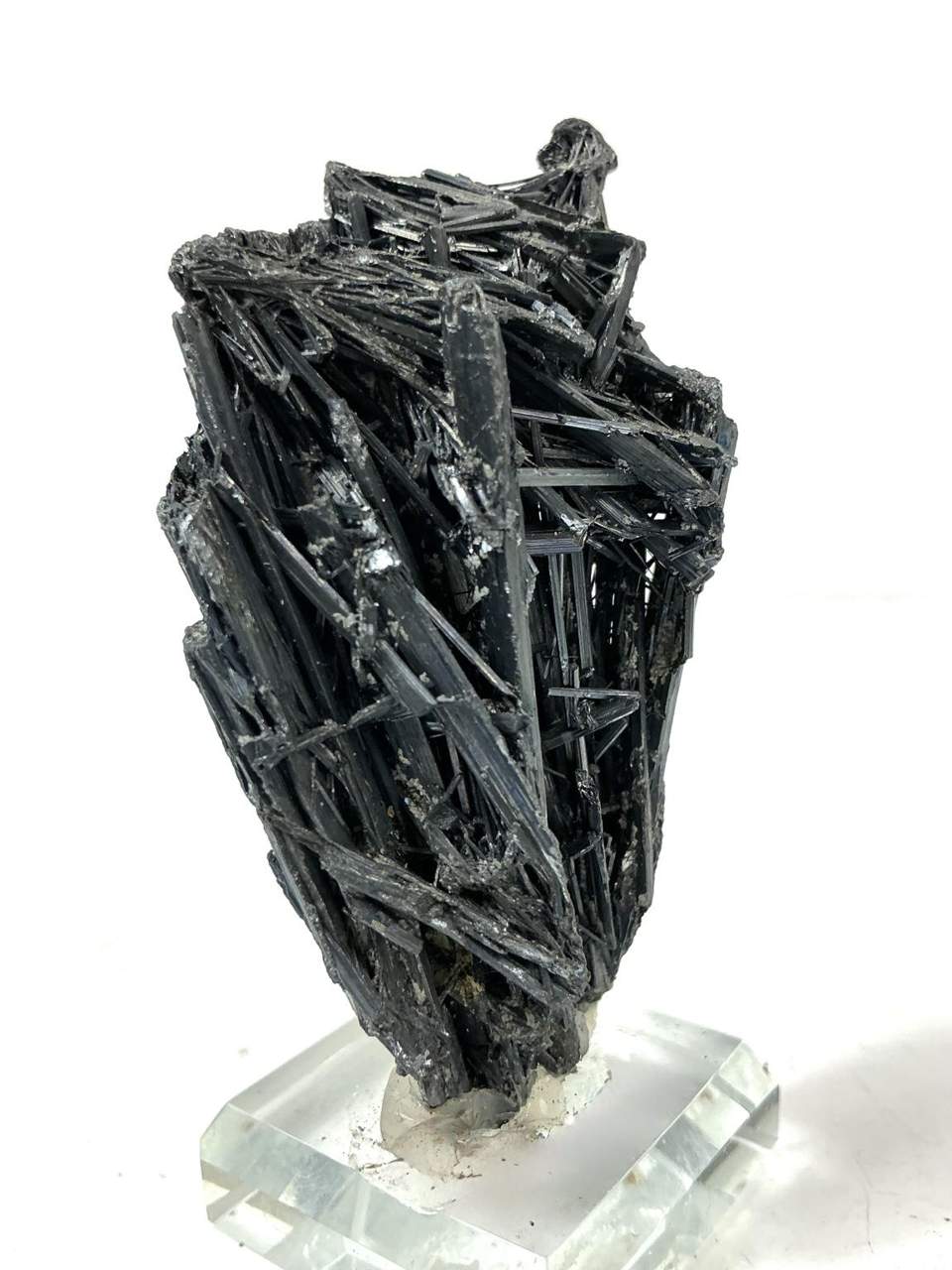
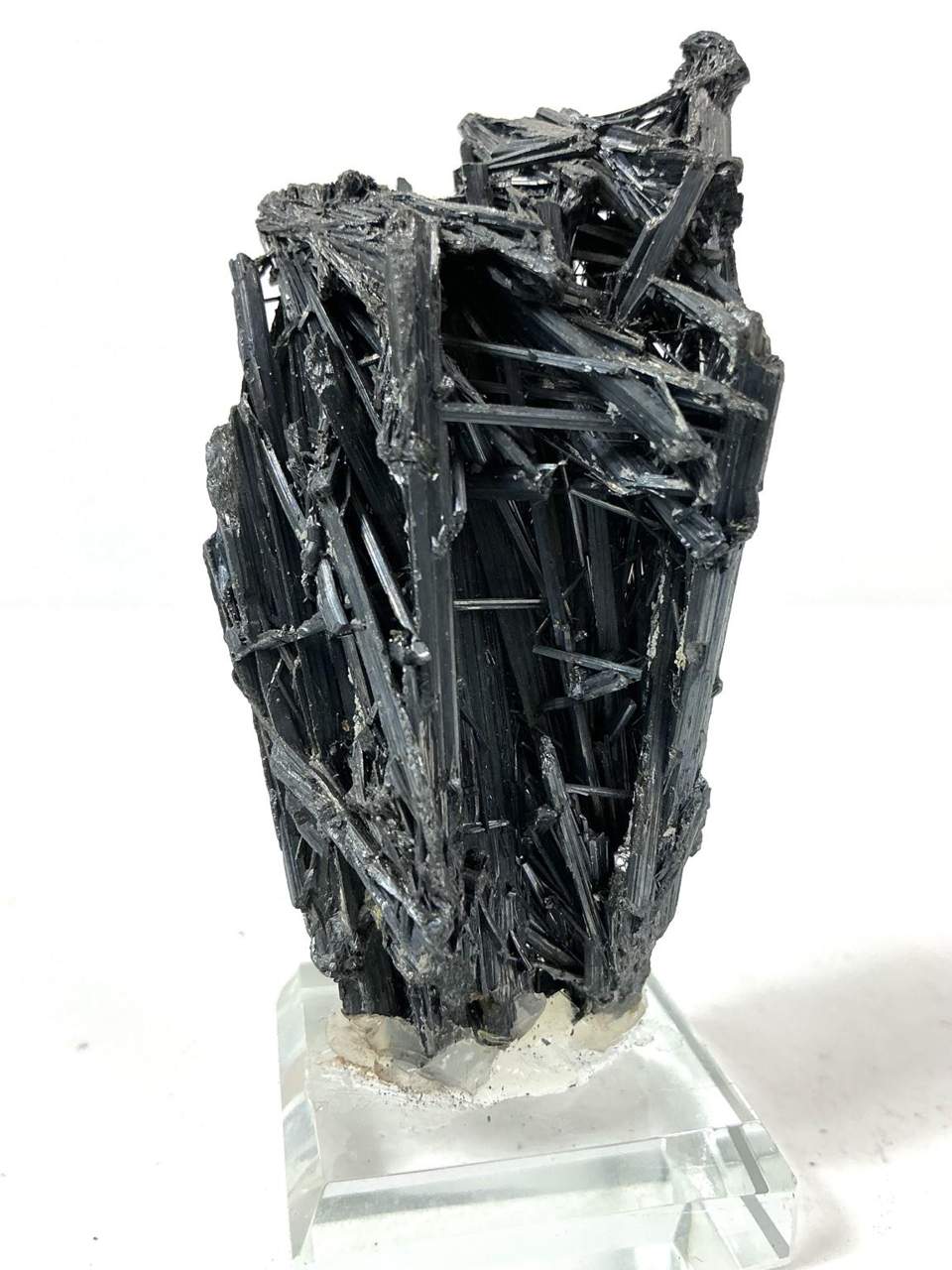
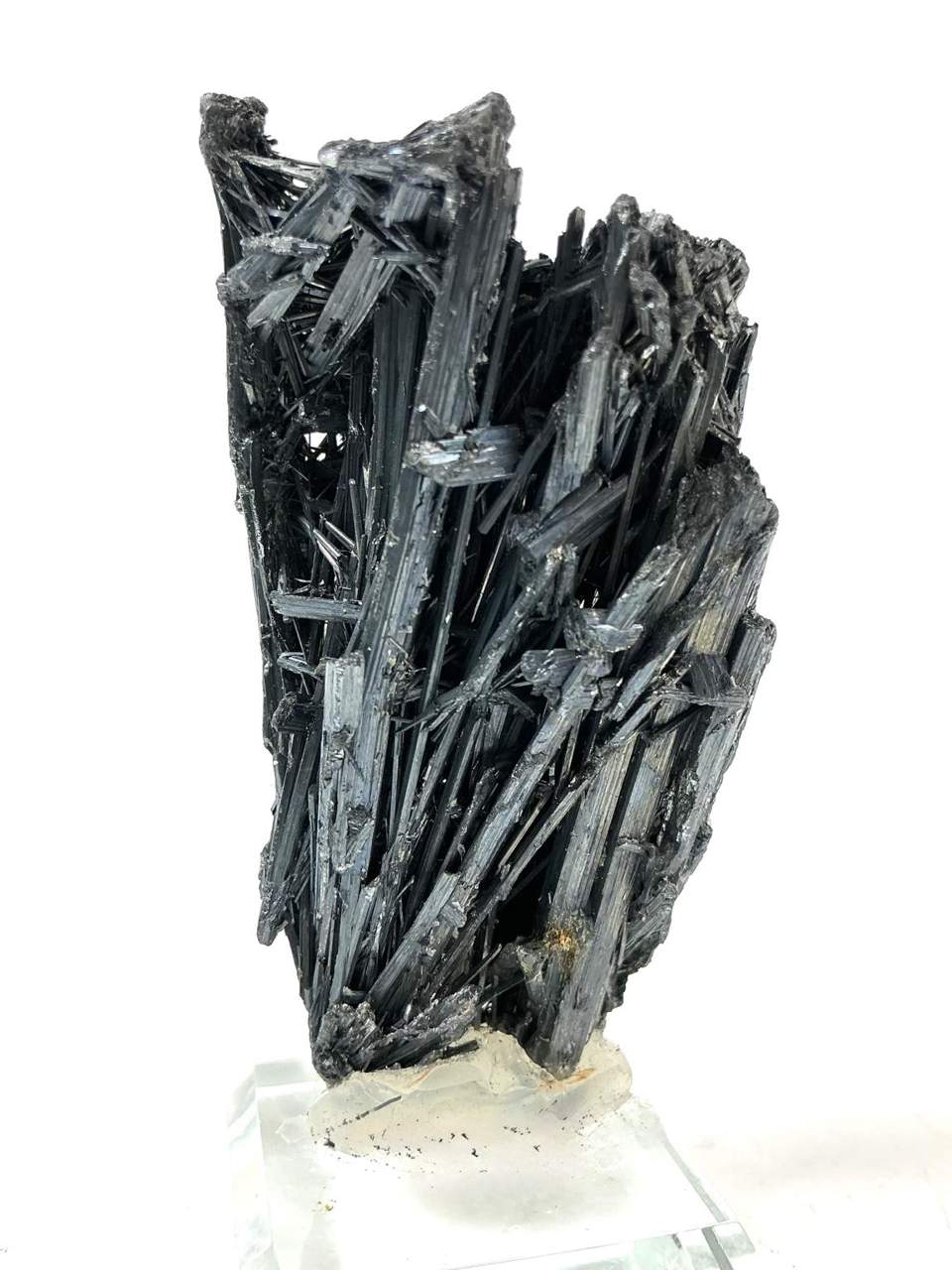
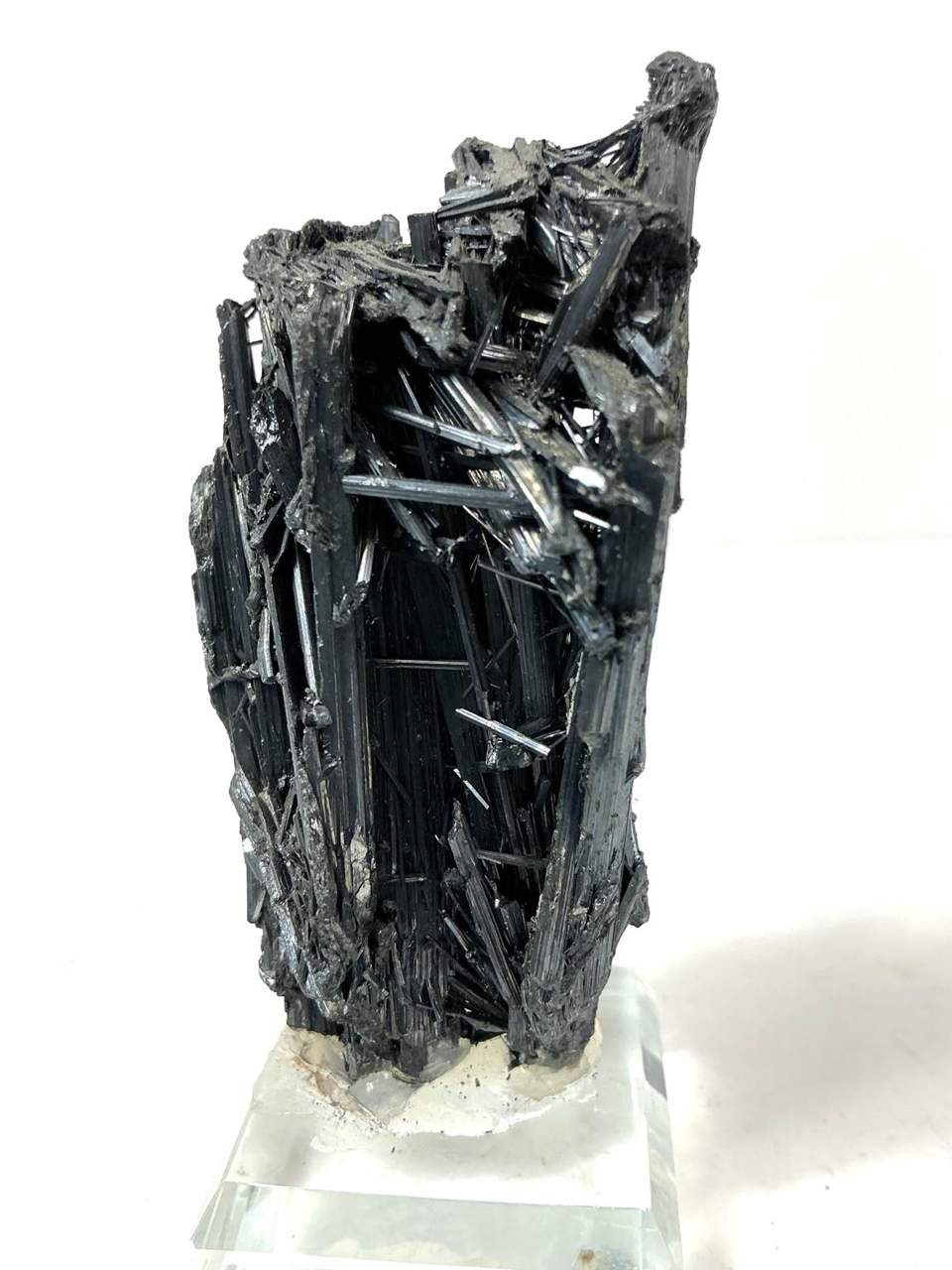
A compact upright cluster of metallic Stibnite blades, with slender crossing crystals around longer dark-steel columns. Silver-grey reflections highlight the lengthwise grooves and open spaces between the intergrown sprays.
Longer columns frame a network of finer blades crossing in several directions. The open structure gives this small specimen depth, while the side and reverse views reveal the crystal grooves and natural edges.
The associated mineral is recorded as Dolomite in the supplied specimen information. This piece is from the same Qinglong Mine batch as the other Stibnite specimens in the collection.
I have shown the exact specimen from five angles. You will receive the mineral photographed. Colour and reflections vary with lighting and screen settings.
The crossing arrangement described above is an important part of the specimen’s silhouette. It lets the direction of individual crystals be followed through the group, with open spaces making their outlines more apparent. Intersecting crystals alone do not establish a specific twin law; here the description concerns the visible arrangement rather than a laboratory-confirmed crystallographic relationship.
The recorded Dolomite adds a carbonate association to the specimen. Its contrasting surface character helps separate the featured growth from the material around it. This relationship gives the piece another point of interest beyond the principal crystals: it can be appreciated both for the main mineral’s habit and for the way the minerals are arranged together.
Stibnite is antimony sulphide, a metallic mineral often associated with elongated crystals. It forms in hydrothermal veins, where mineral-bearing fluids deposit material as conditions change. Its lead-grey to silver-grey appearance and long crystal habit make it quite different in character from the compact shapes of many other metallic minerals.
Collectors value the arrangement of the blades as much as their shine. Parallel growth, crossing crystals and radiating groups create different silhouettes, while lengthwise surface detail can emphasise the direction of growth. Stibnite is relatively soft and its projecting crystals deserve careful handling. Support the stable part of the specimen when moving it rather than lifting it by a blade.
The recorded origin is Qinglong Mine, Guizhou, China. Within a collection of Stibnite specimens, this locality gives the piece a geographical identity alongside its particular crystal habit and natural setting.
The specimen measures 70 × 40 × 20 mm, with a recorded weight of 45 g. The proportions give a useful guide to its place in a display, with the individual crystal arrangement and mineral association remaining the principal points of interest.
Support the stable part of the specimen rather than an elongated blade. Stibnite is relatively soft, and projecting metallic growth can be damaged by pressure. A secure display lets the blade arrangement and surface detail be appreciated with minimal handling.