Collector stibnite · One specimen only
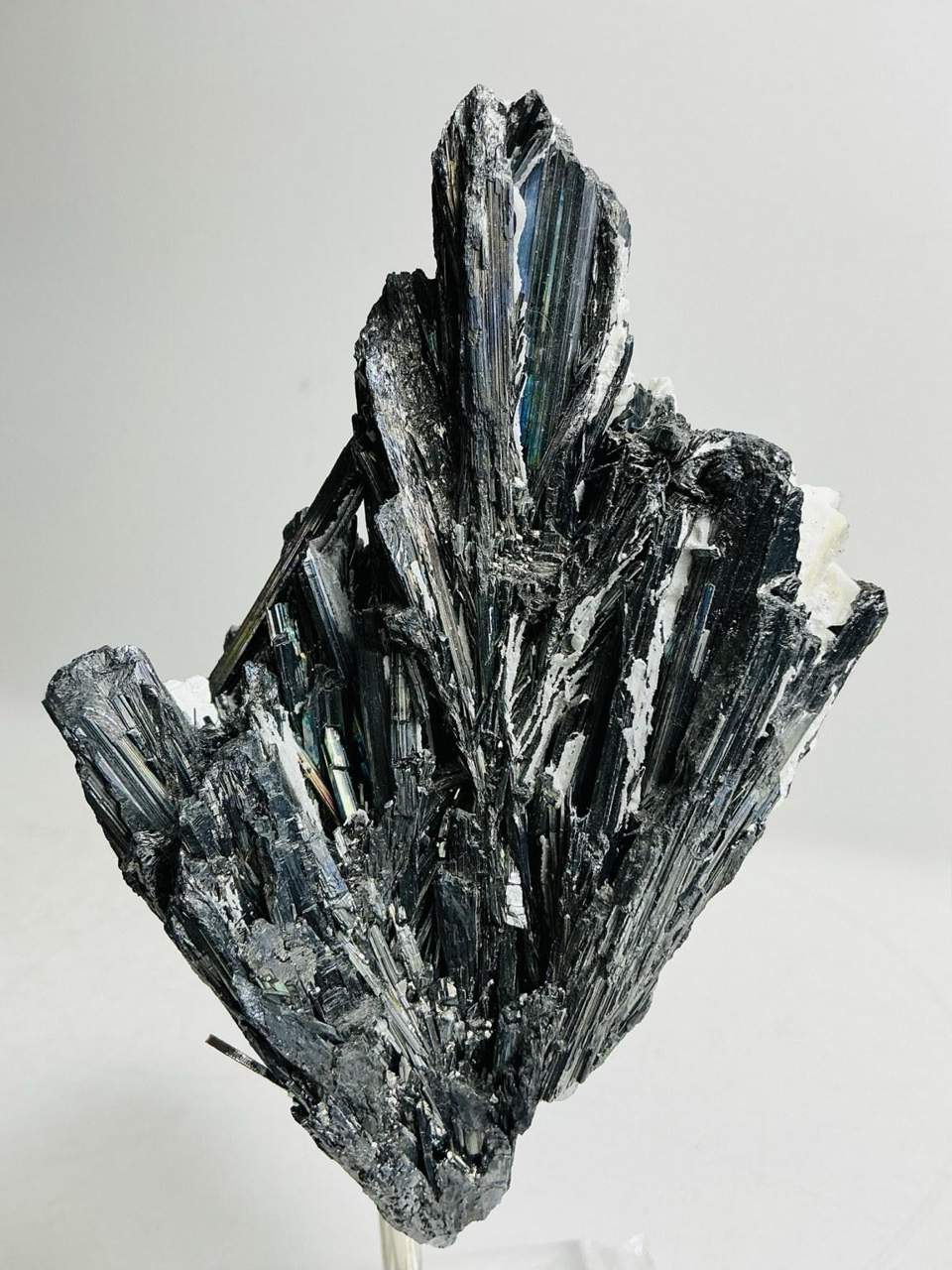
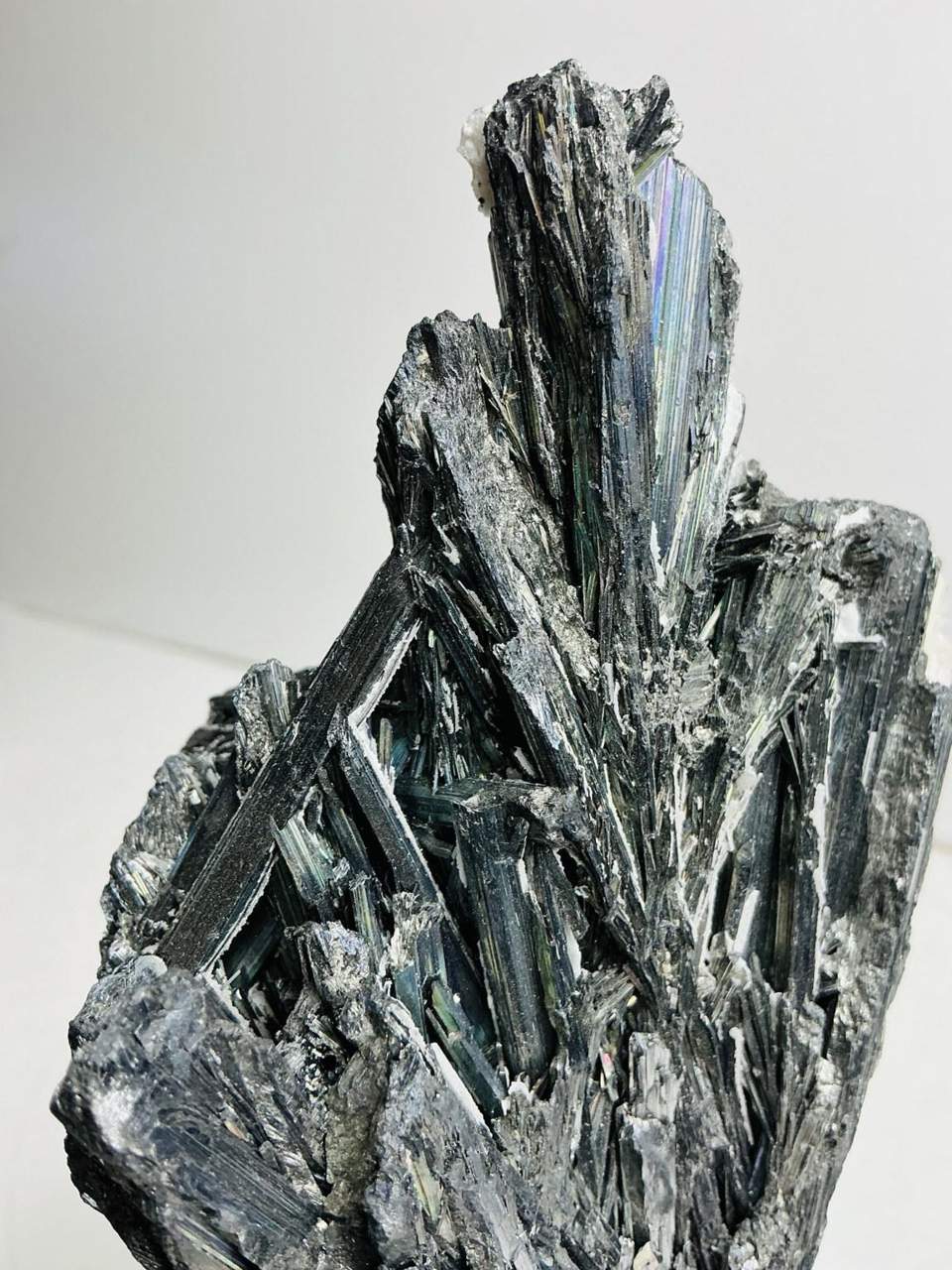
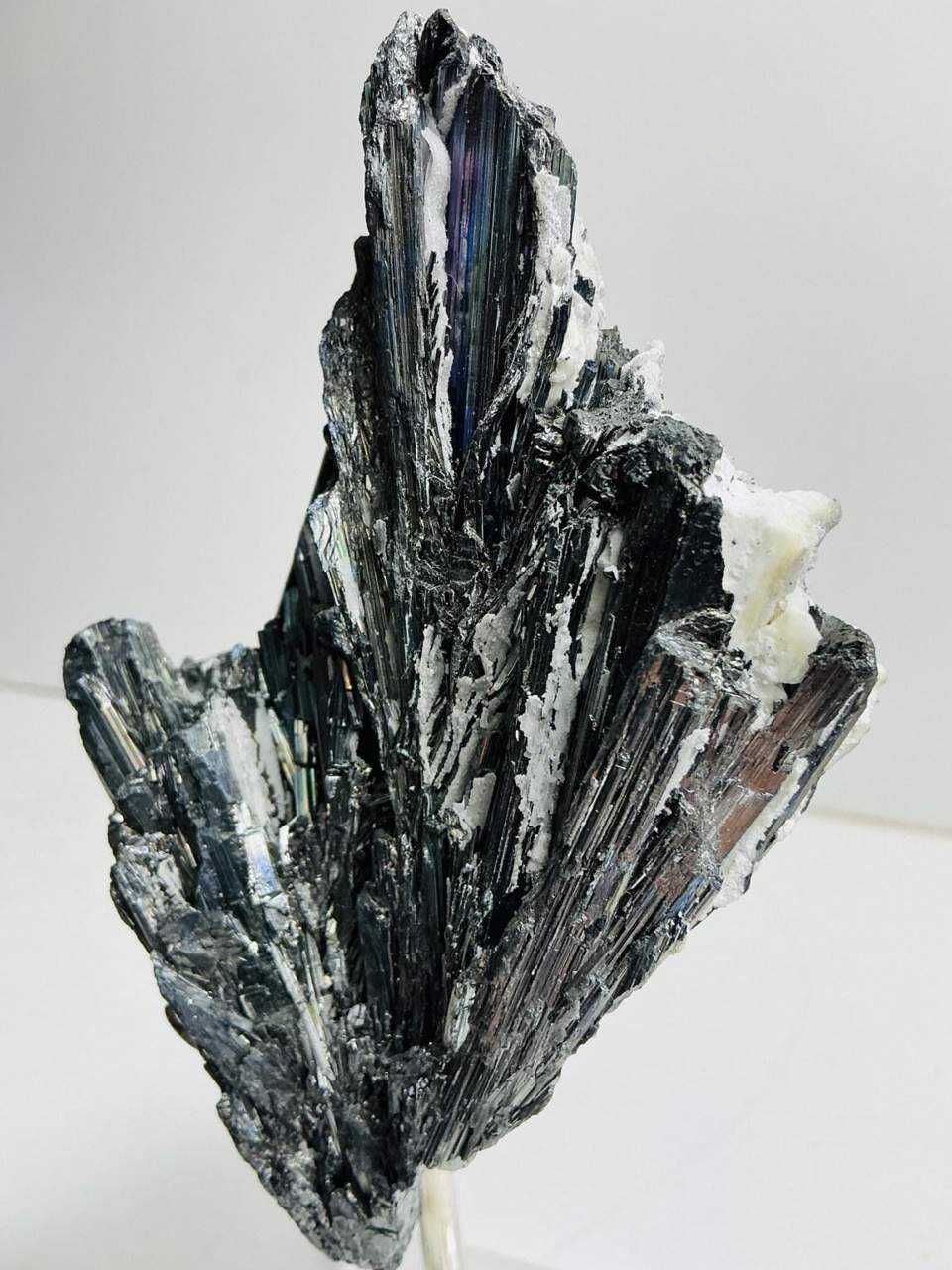
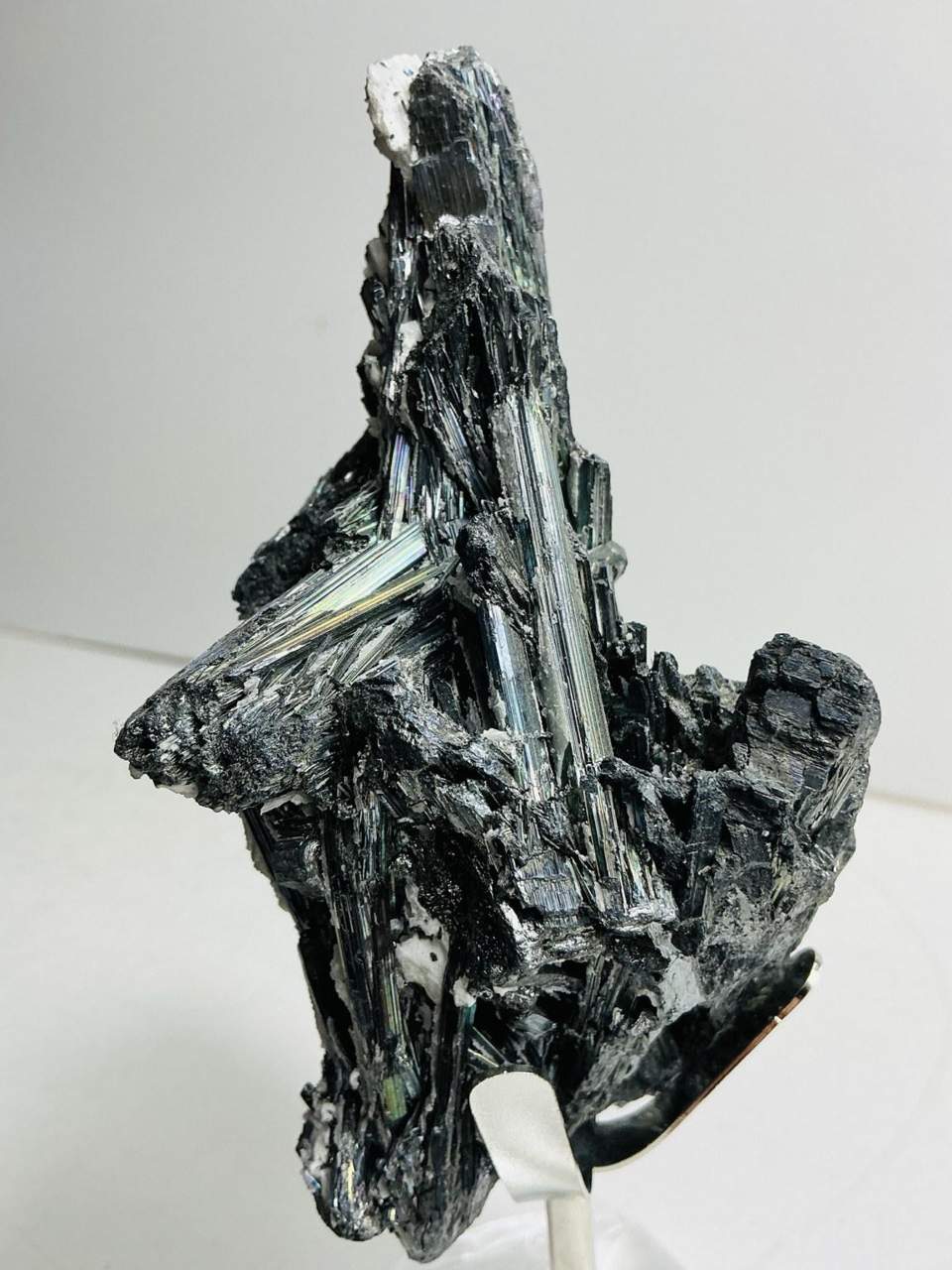
Stibnite Crystal Cluster with Dolomite
Qinglong Mine, Guizhou Province, China
£345
Postage: £3.70, added to your specimen price before payment. Choose the region matching your delivery address.
International rates are for parcels up to 2 kg. Contact Avalon before buying heavier or oversized pieces. Royal Mail 24 and 48 are service names, not guaranteed arrival times.
Description
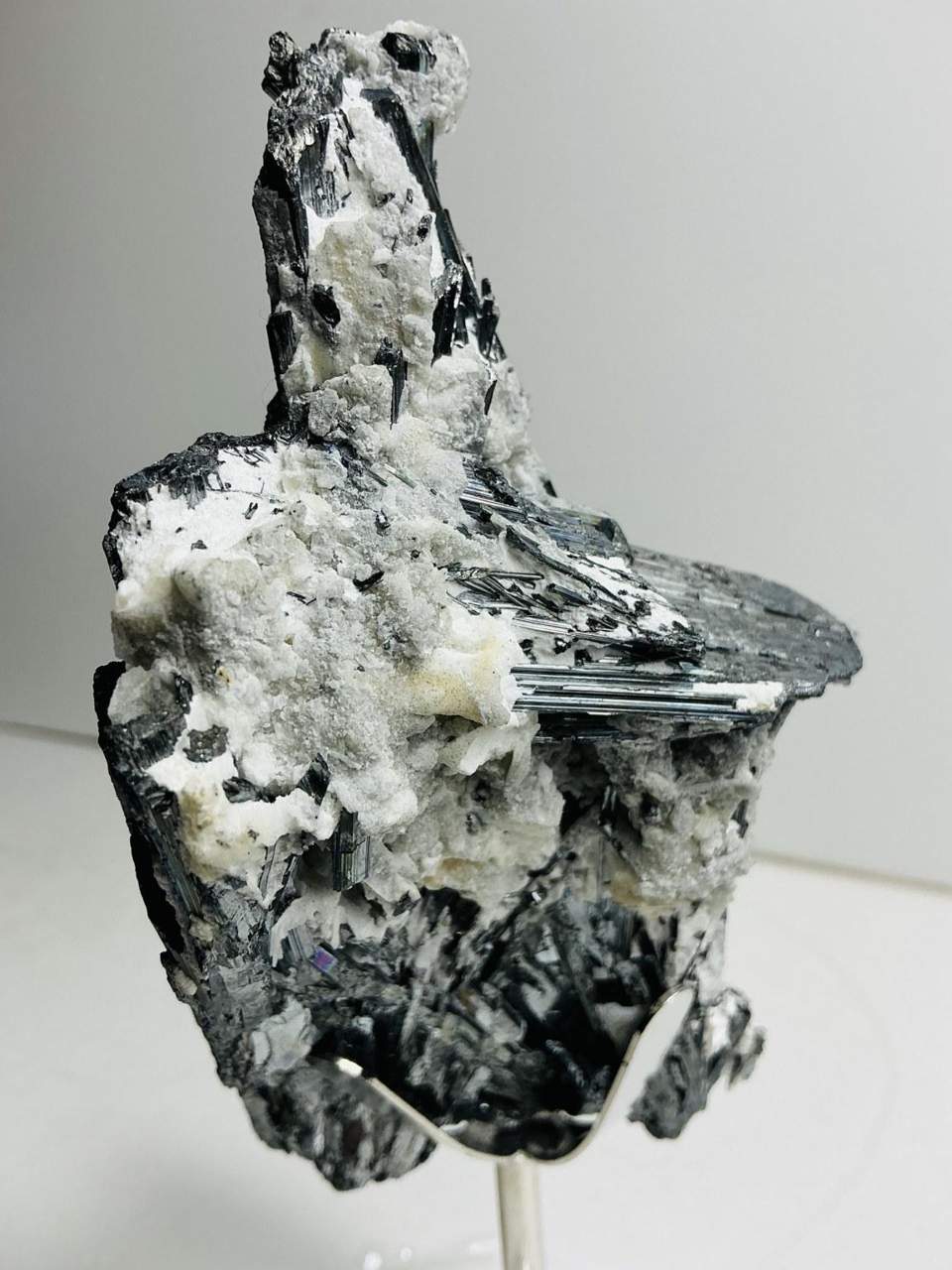
A powerful, densely crystallised cabinet specimen featuring tightly intergrown sprays of metallic silver-grey Stibnite blades with contrasting white Dolomite.
This substantial specimen displays numerous thick, sharply striated Stibnite crystals arranged in strong vertical and diagonal sprays. The blades intersect and overlap throughout the piece, creating a sculptural formation with exceptional depth, shadow and visual complexity.
Strong metallic lustre emphasises the natural striations along the crystal faces. Under changing light, selected blades reveal subtle blue, green, purple and golden iridescent reflections. These attractive flashes are natural; the specimen has not been polished, coated or artificially treated.
The white Dolomite is naturally integrated throughout the specimen, outlining individual Stibnite blades and providing attractive contrast without overpowering the main crystal growth. Qinglong Mine is internationally recognised for bold, lustrous Stibnite specimens with strong display presence.
Handling and care: Handle sparingly and support the specimen securely from beneath. Avoid pressure on individual blades and do not wash, soak or clean it with water or chemicals. Keep it dry and away from children and pets. Wash hands after handling and avoid creating or inhaling mineral dust.
The bladed growth described here gives the specimen a strong sense of direction. Overlapping elongated forms create layers and spaces through the group, while reflections emphasise individual edges. The overall arrangement is worth appreciating alongside the details of each exposed surface, particularly when comparing the piece with more compact crystal clusters.
The recorded Dolomite adds a carbonate association to the specimen. Its contrasting surface character helps separate the featured growth from the material around it. This relationship gives the piece another point of interest beyond the principal crystals: it can be appreciated both for the main mineral’s habit and for the way the minerals are arranged together.
Stibnite is antimony sulphide, a metallic mineral often associated with elongated crystals. It forms in hydrothermal veins, where mineral-bearing fluids deposit material as conditions change. Its lead-grey to silver-grey appearance and long crystal habit make it quite different in character from the compact shapes of many other metallic minerals.
Collectors value the arrangement of the blades as much as their shine. Parallel growth, crossing crystals and radiating groups create different silhouettes, while lengthwise surface detail can emphasise the direction of growth. Stibnite is relatively soft and its projecting crystals deserve careful handling. Support the stable part of the specimen when moving it rather than lifting it by a blade.
The recorded origin is Qinglong Mine, Guizhou, China. Within a collection of Stibnite specimens, this locality gives the piece a geographical identity alongside its particular crystal habit and natural setting.
The specimen measures 12.5 × 9 × 6.5 cm, with a recorded weight of 504 g. The proportions give a useful guide to its place in a display, with the individual crystal arrangement and mineral association remaining the principal points of interest.
Condition: Stibnite is naturally soft and fragile, so minor contacts, irregular edges and incomplete blade terminations may be present from natural formation and extraction.
Support the stable part of the specimen rather than an elongated blade. Stibnite is relatively soft, and projecting metallic growth can be damaged by pressure. A secure display lets the blade arrangement and surface detail be appreciated with minimal handling.
Available from Avalon
A distinctive Qinglong cabinet specimen.
Ask us about availability, delivery or additional photographs. A complimentary acrylic display stand is included.
Contact Avalon