Thumbnail mineral specimen · One available
Reference: AC255
Dioptase with Fornacite · Thumbnail Specimen
N’tola Mine, Mindouli District, Republic of the Congo
£35
About this Dioptase specimen
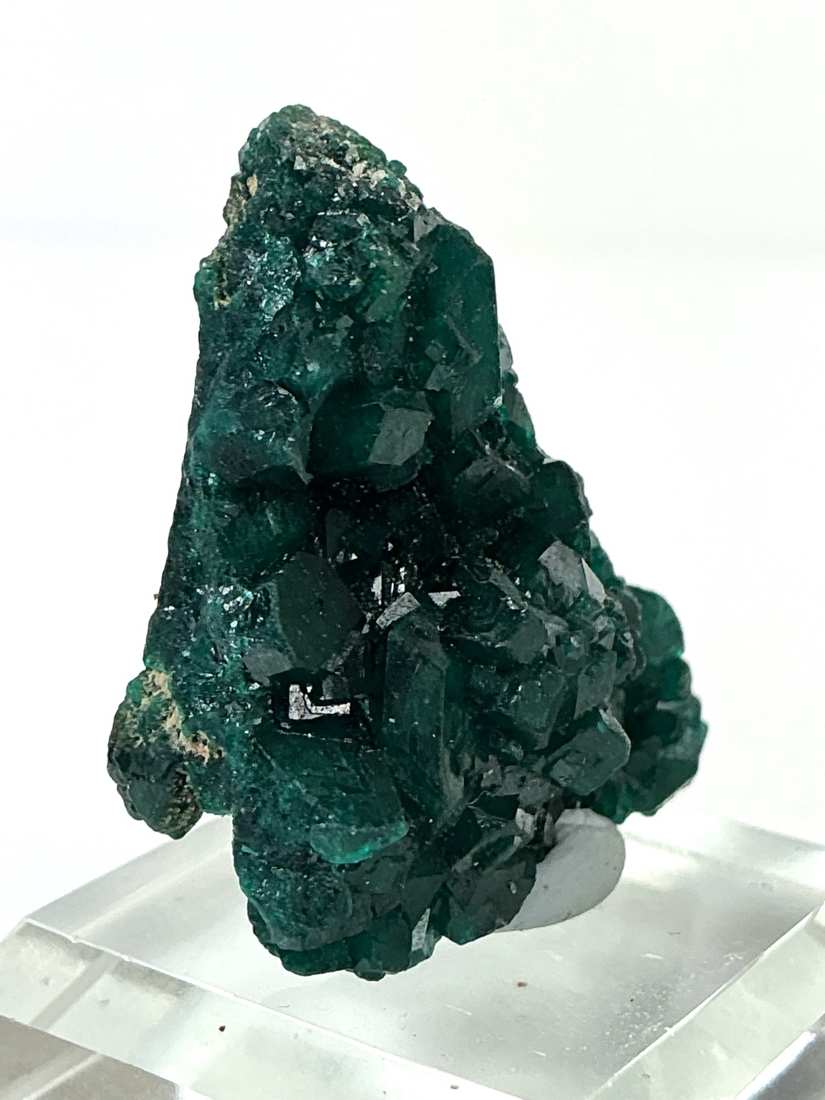
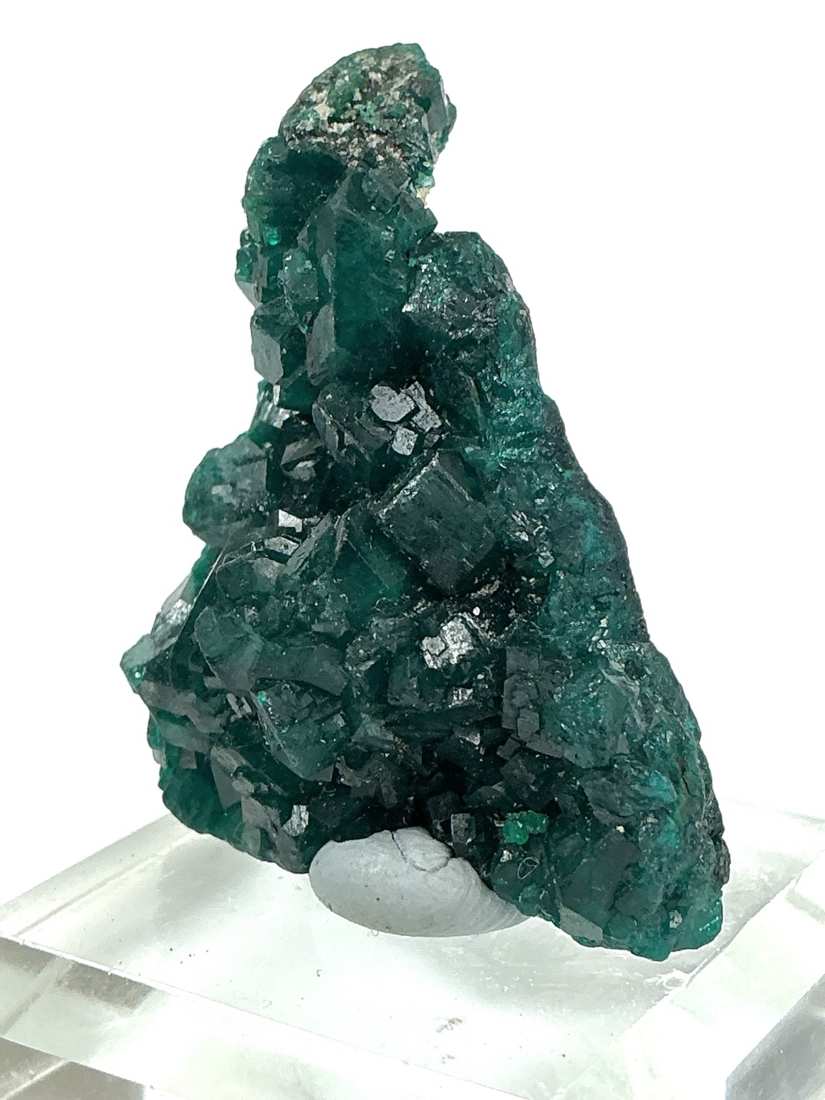
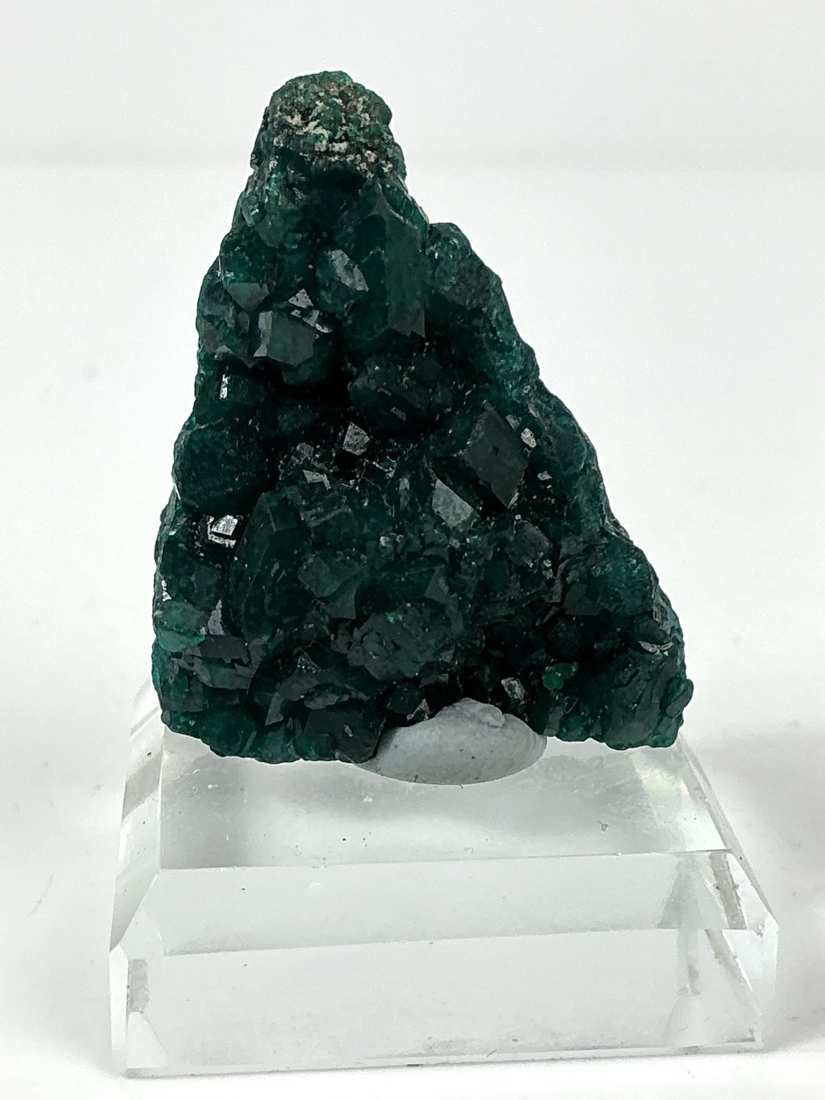
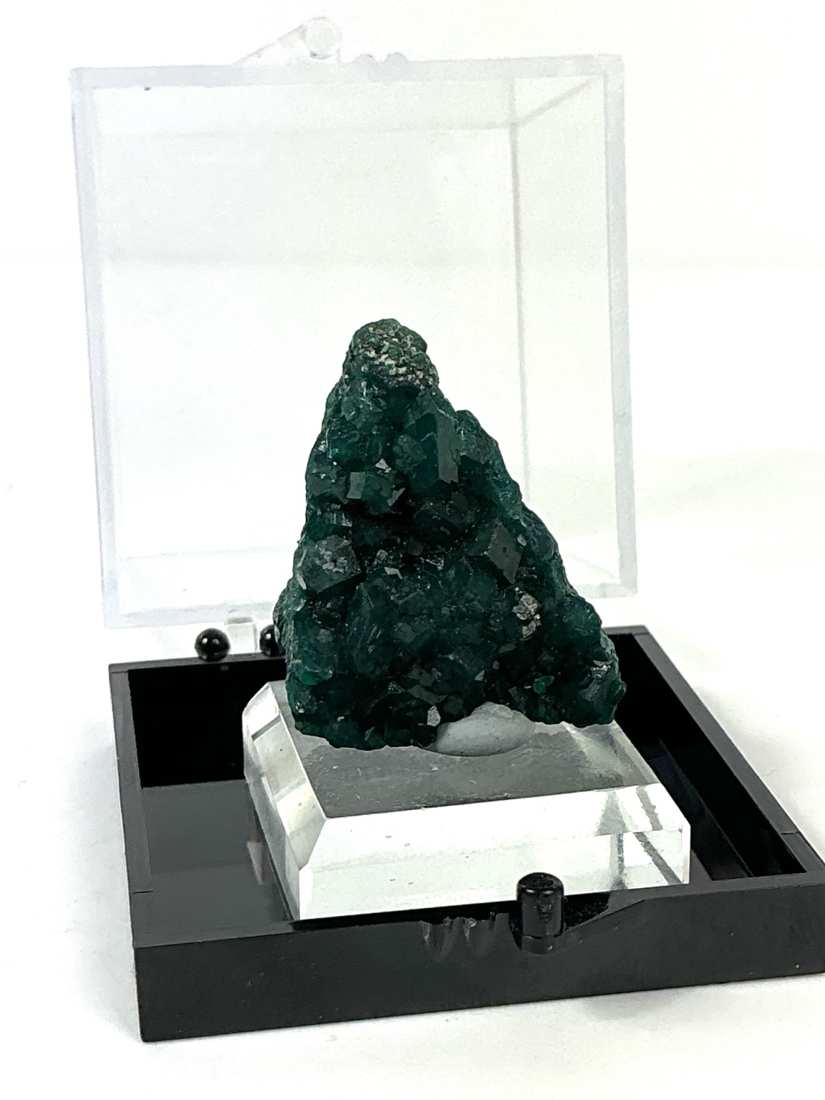
This Dioptase specimen has an upright, tapering form covered with closely intergrown green crystals. Larger blocky crystals project from the principal face, while smaller growth fills the spaces between them. The uneven arrangement creates a series of ridges and shallow pockets rather than a single flat crystalline surface.
The colour ranges from deep bottle-green in the recesses to brighter emerald and blue-green along exposed edges. Broad faces reflect light in distinct flashes, contrasting with finer, more granular areas. This combination of glassy lustre and textured growth gives the specimen visible detail even within its compact outline.
Several larger crystal faces remain recognisable within the intergrowth. Their angular boundaries meet at different inclinations, and some show stepped or uneven surfaces. Looking from the side reveals how these crystals project from the underlying cluster and how the smaller crystals bridge the gaps around their bases.
Fornacite is recorded as an associated mineral. Small patches of paler associated material are present around parts of the green crystallisation, providing a quieter contrast to the dominant Dioptase. The photographs show these areas alongside the main crystals so the differences in texture and reflectivity can be examined.
The interest of this piece lies in the concentration of crystal faces across an upright natural form. The different views show the projecting crystals, the fine intergrowth and the less reflective areas, giving a fuller record of the exact specimen than the main photograph alone.
Know someone who would love this specimen?