Natural mineral specimen · One available
Twinned Cassiterite on Muscovite — Pingwu Beryl Mine, Mount Xuebaoding, China
Huya Deposit (Pingwu Beryl Mine), Mount Xuebaoding, Pingwu County, Mianyang, Sichuan Province, China
£800
Postage: £3.70, added to your specimen price before payment. Choose the region matching your delivery address.
International rates are for parcels up to 2 kg. Contact Avalon before buying heavier or oversized pieces. Royal Mail 24 and 48 are service names, not guaranteed arrival times.
Description
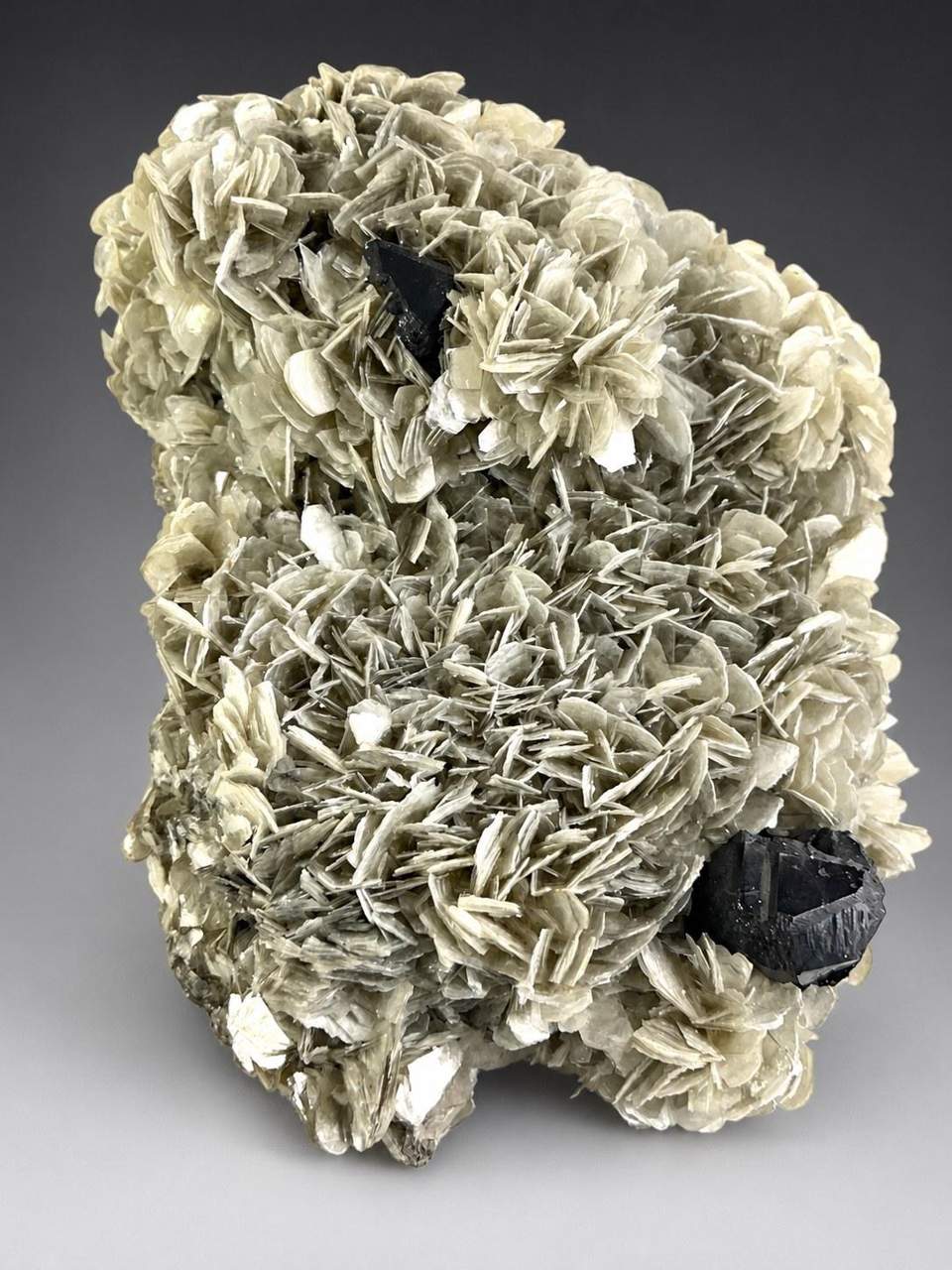
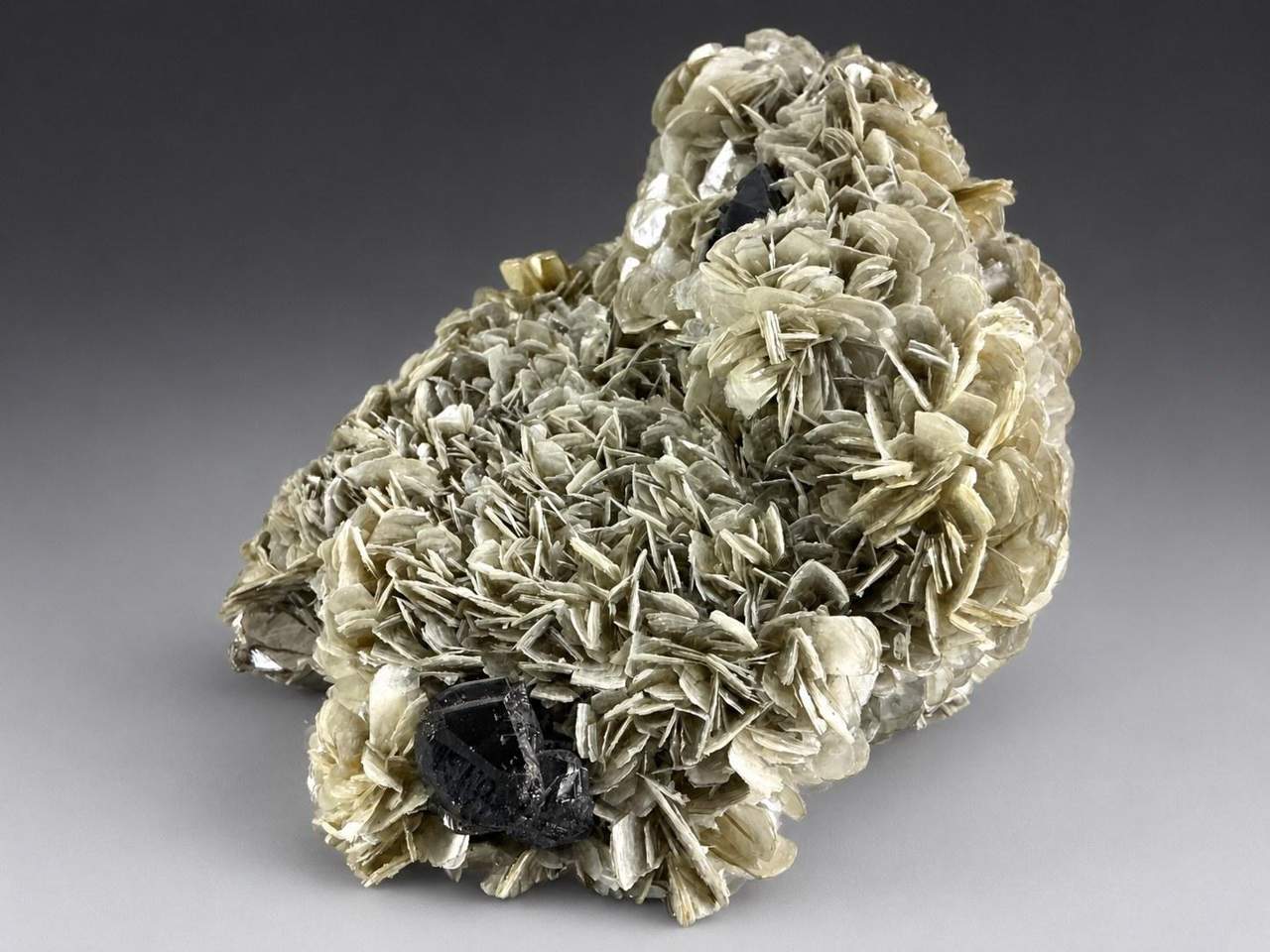
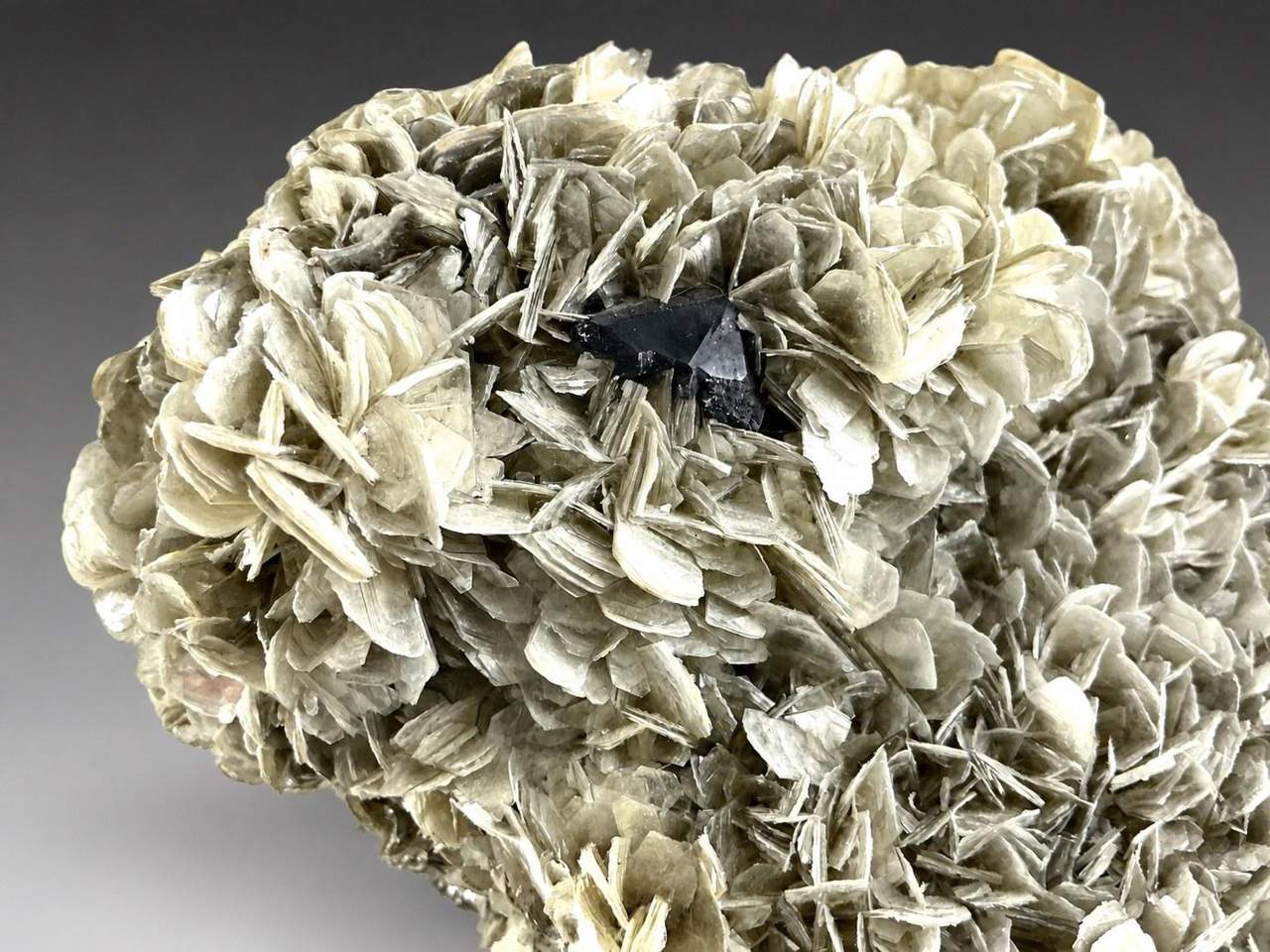
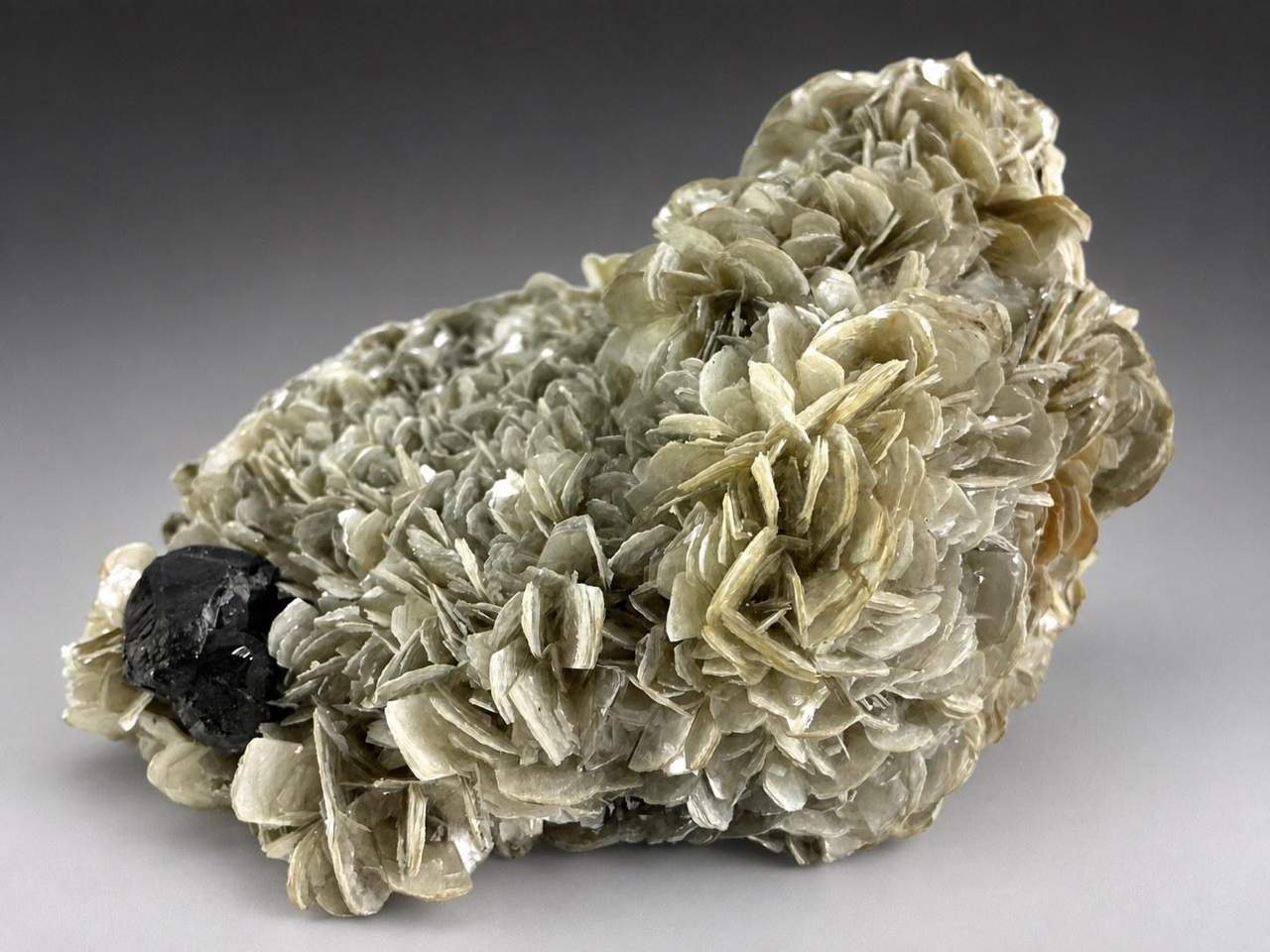
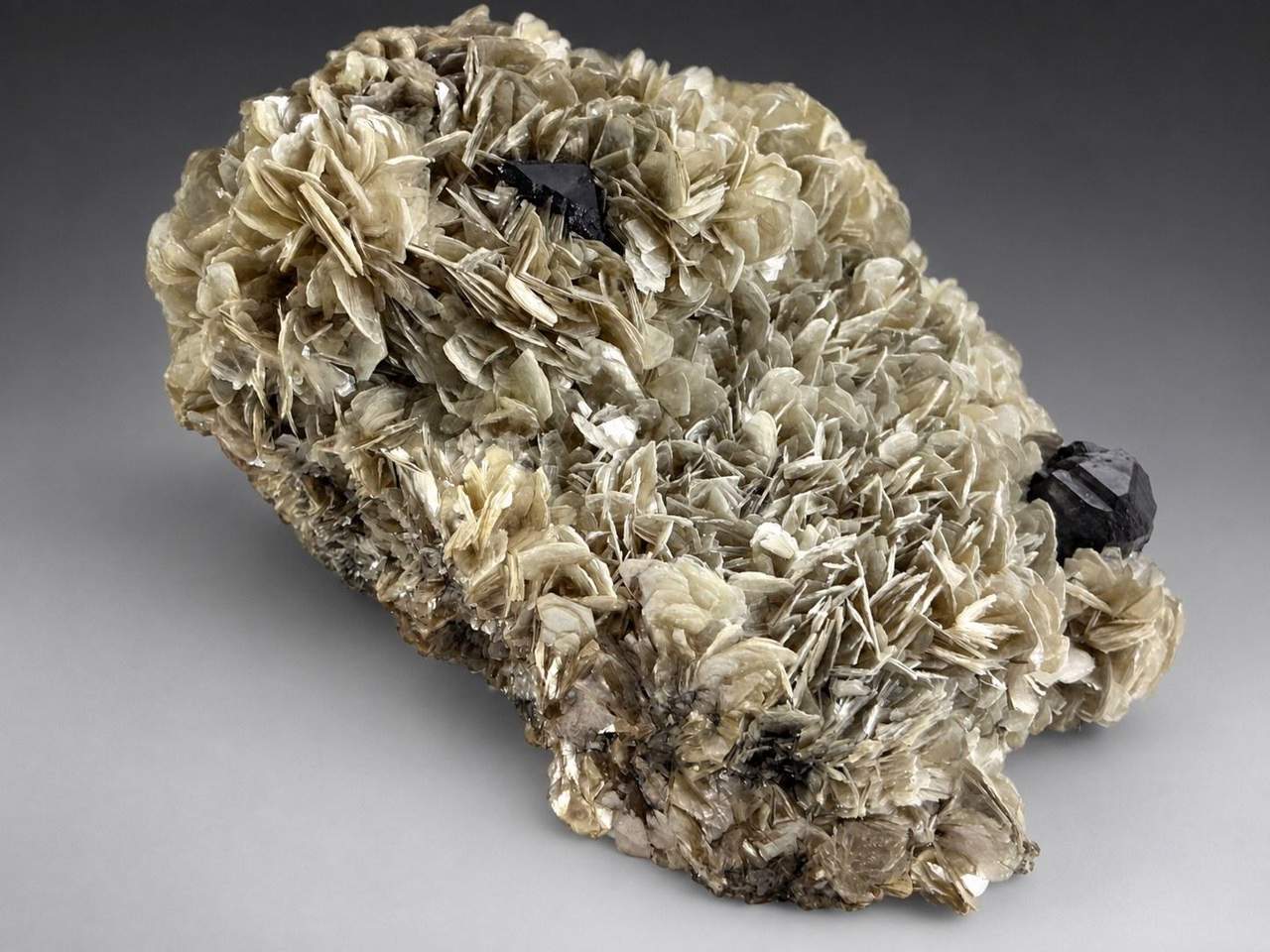
A substantial cabinet specimen featuring multiple lustrous black Cassiterite crystals across a dense matrix of silvery, champagne-coloured Muscovite mica. The dark crystals stand out against the pale, overlapping blades, giving the piece a strong contrast in both colour and texture.
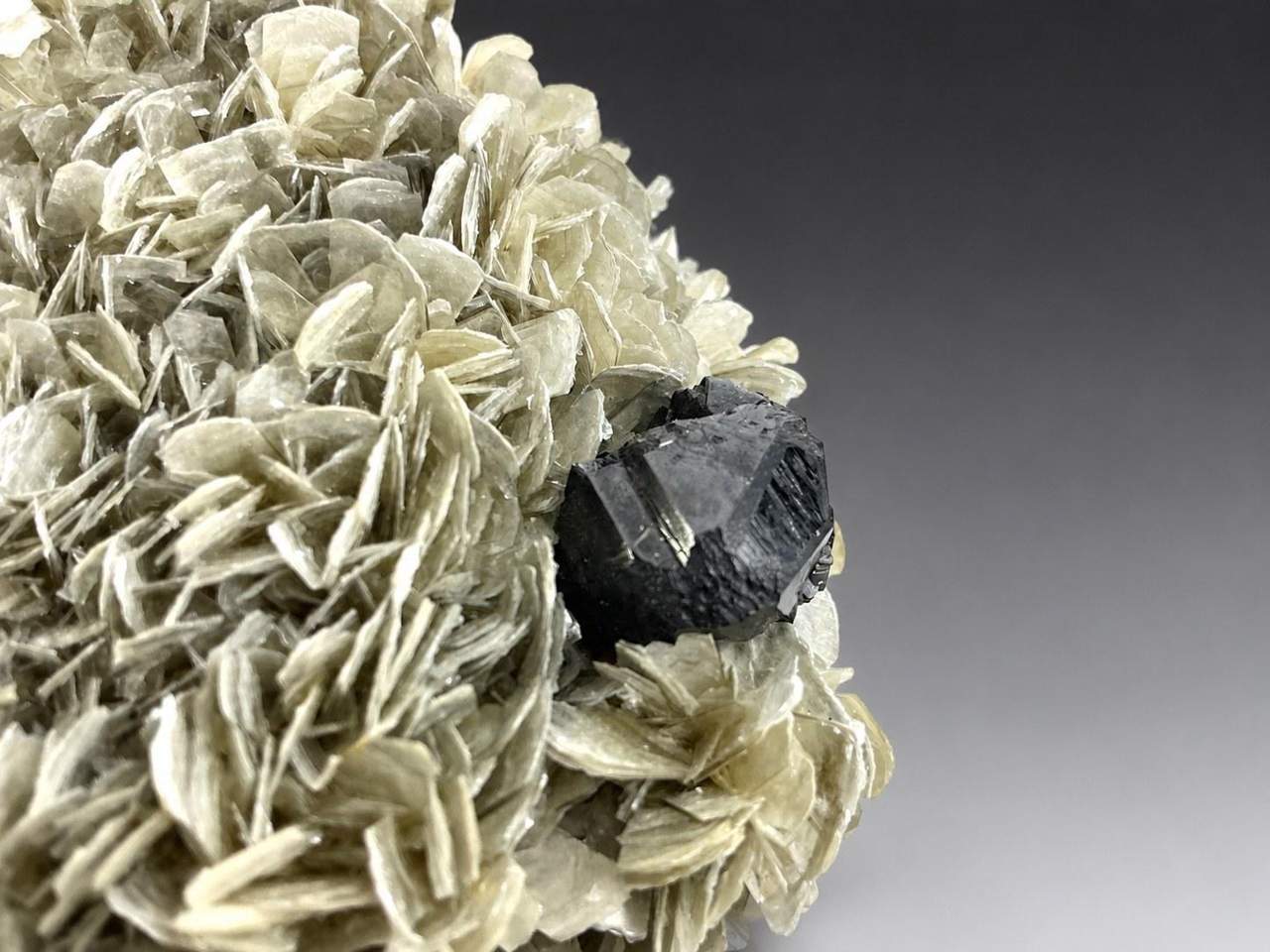
The Cassiterite shows short, strongly developed crystal forms with complex twinned growth. Glossy black faces and pronounced growth textures create a bold geometric outline against the finer mica. A prominent chunky group occupies the front of the specimen, with additional exposed crystals higher across the matrix. Their different positions give the piece more to explore than a single isolated crystal.
The Muscovite is an important part of the specimen’s character. Layered blades, rosette-like groups and radiating aggregates build a sculptural landscape around the Cassiterite. Fine mica edges catch softer reflections, while the larger dark faces produce brighter, more concentrated highlights. The result is a natural association with depth and detail across the whole piece.
Cassiterite is tin oxide, the principal ore mineral of tin. It crystallises in the tetragonal system and commonly develops twins, where related crystal orientations grow together according to a crystallographic relationship. Here, the interest is in the crystallised form and the way those dark groups are set into the mica, rather than in the mineral’s industrial use.
Muscovite belongs to the mica group and has a layered structure with very well-developed cleavage. This explains its characteristic thin sheets and pearly reflections. Its pale, delicate growth provides a contrasting setting for the more substantial Cassiterite crystals, making the mineral association an integral part of the display.
Avalon acquired this specimen in China as part of a parcel containing Aquamarine, Quartz and Muscovite material from Mount Xuebaoding. It is attributed to the Huya Deposit, commonly known as the Pingwu Beryl Mine. The association, crystal habit and mica matrix are consistent with that attribution; the specific mine origin has not been independently confirmed.
At approximately 125 × 100 × 65 mm, it is a substantial cabinet specimen, with several exposed Cassiterite crystals and a generous mica matrix. It offers interest to collectors of tin minerals, twinned crystal growth and Chinese mineral associations, while the contrast between the two minerals gives it a distinctive display presence.
The specimen is described as natural, with no known treatment or polishing. Natural contacts and minor imperfections may be present. The thin mica blades should be handled gently, supporting the stable matrix rather than the projecting crystals.